Cart
0
You may also like


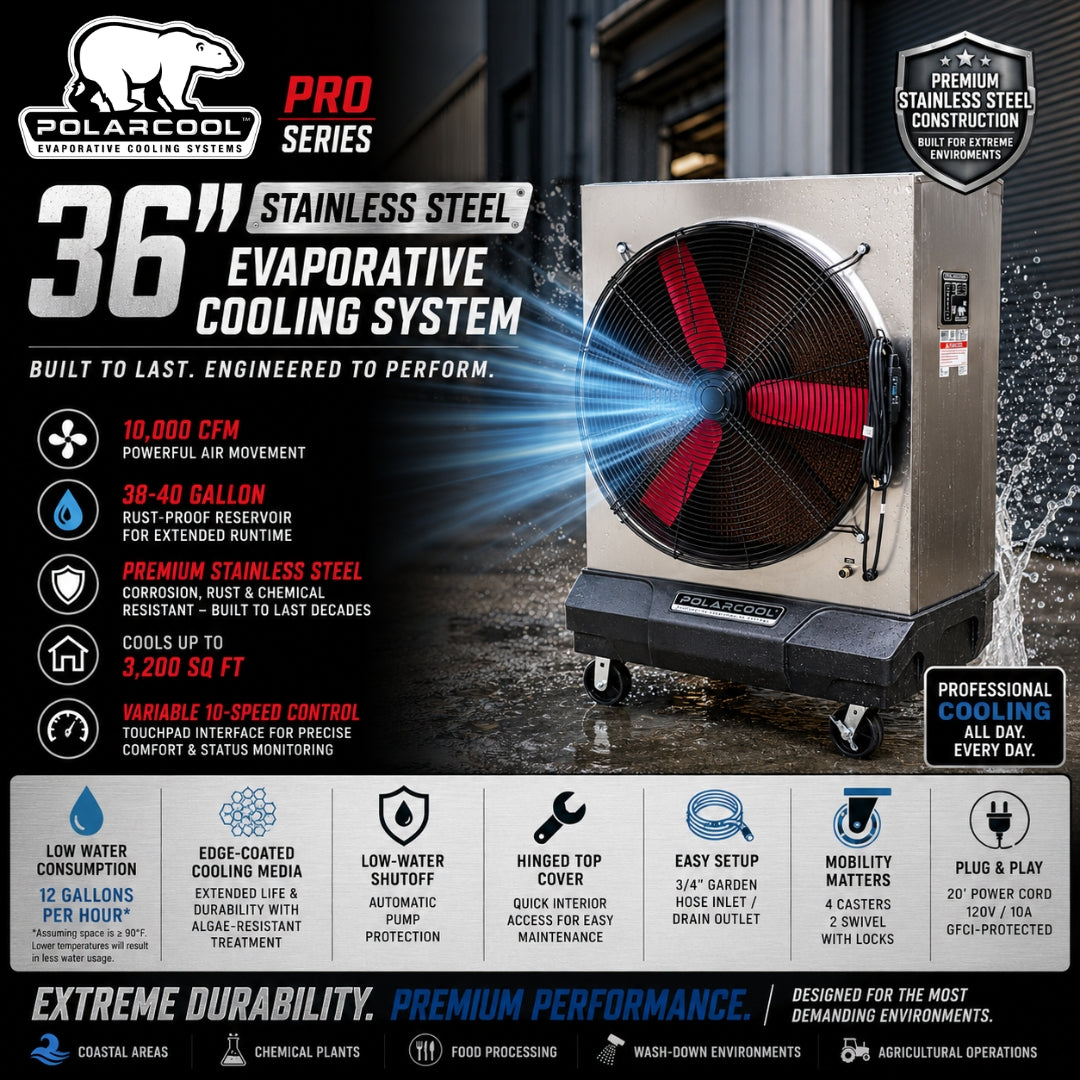
When it comes to cooling large spaces, many business owners, facility managers, and homeowners face the same question: should you invest in traditional air conditioning or an evaporative cooler fan?
The answer depends on your environment, cooling goals, and budget. While air conditioning remains the preferred solution for tightly sealed indoor spaces, evaporative cooling offers significant advantages in warehouses, garages, workshops, manufacturing facilities, and outdoor environments.
Understanding the differences between these two cooling methods can help you choose the most effective and cost-efficient solution for your application.
Air conditioners use a refrigeration cycle that relies on compressors, condensers, refrigerants, and evaporator coils to remove heat from indoor air.
The system continuously recirculates air within a sealed environment while removing heat and humidity.
This process works extremely well in:
However, traditional AC systems become less efficient when cooling large open spaces or buildings with frequent door openings.
Evaporative cooler fans use a completely different approach.
Instead of refrigerants and compressors, they use water and airflow to lower air temperature naturally.
The process is simple:
Because evaporative cooling relies on airflow, it performs best in open or semi-open environments where fresh air circulation is available.
One of the biggest advantages of evaporative cooling is reduced energy consumption.
Traditional air conditioners require compressors that consume substantial electricity, particularly when cooling large areas for extended periods.
Evaporative cooler fans primarily power:
Without a compressor, energy demand is significantly lower.
For many facilities, this can translate into noticeable savings during peak cooling months.
While actual operating costs vary based on climate, runtime, utility rates, and equipment size, evaporative cooling is generally recognized as one of the most energy-efficient cooling methods available for open environments.
Installation costs often represent another major deciding factor.
Traditional air conditioning systems frequently require:
Depending on the building, installation expenses can quickly become substantial.
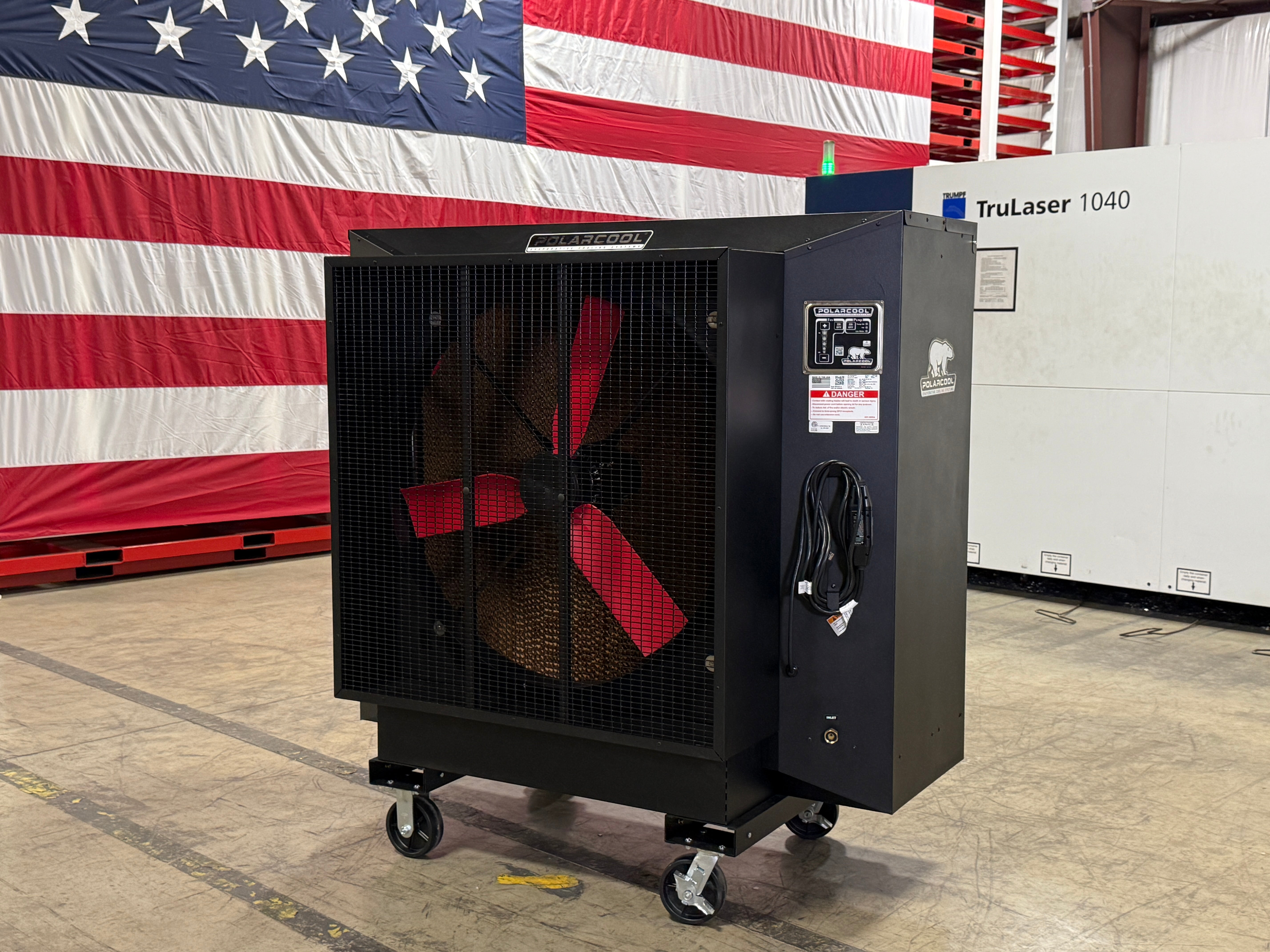
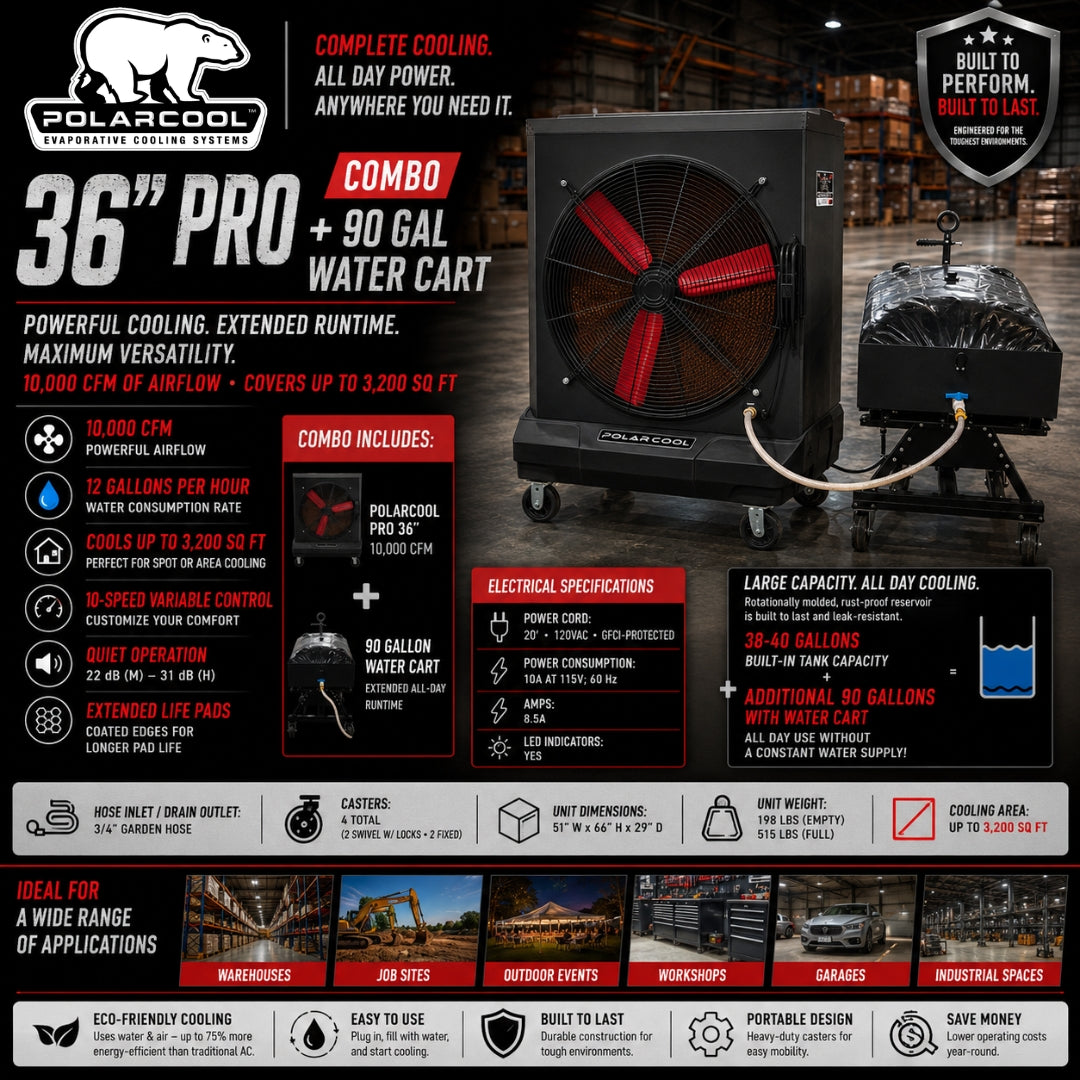
Evaporative cooler fans require far less infrastructure.
Many portable units simply require:
This allows businesses to deploy cooling quickly without major facility modifications.
The answer depends entirely on the environment.
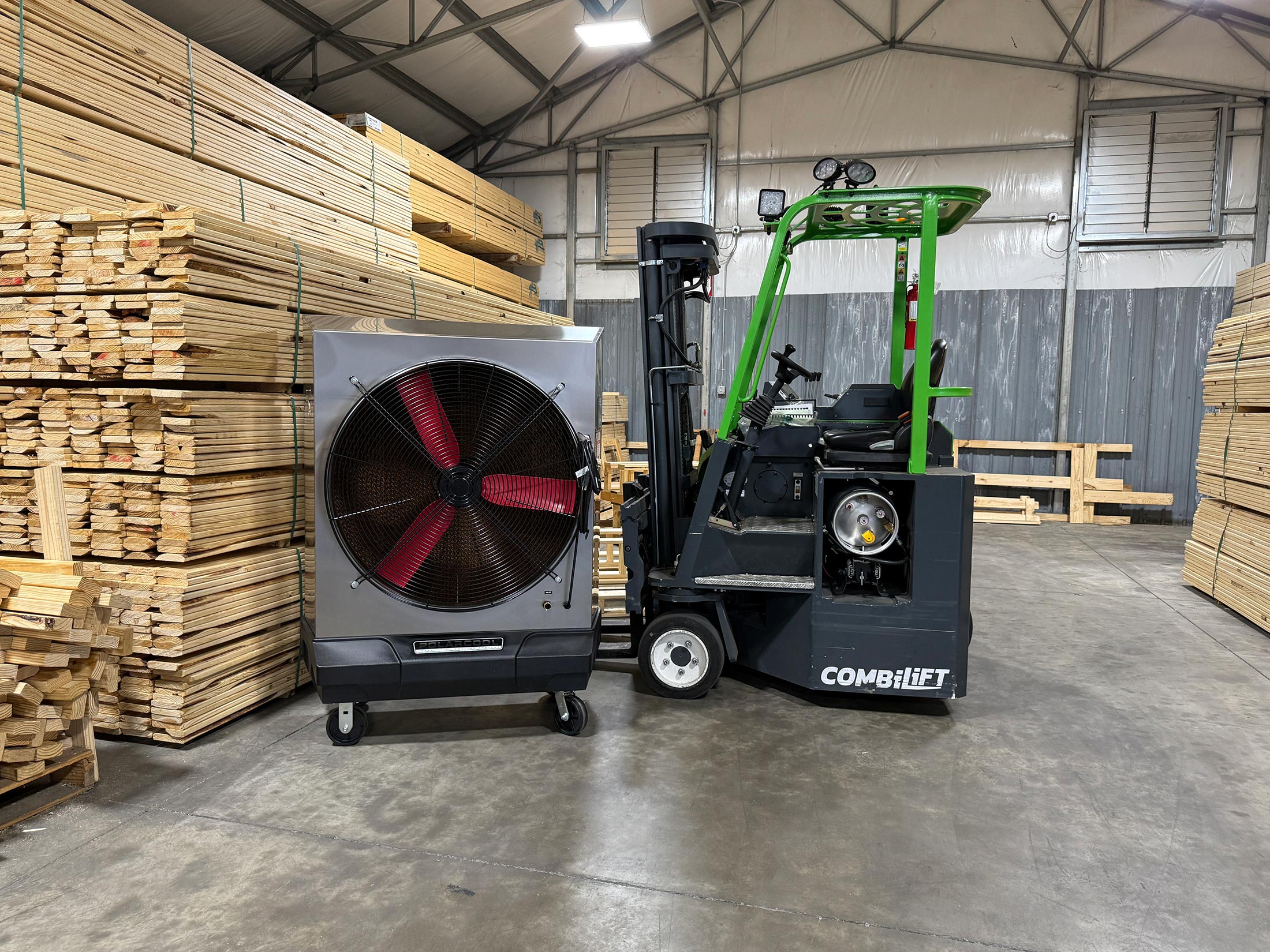
In these situations, evaporative cooling often provides more practical and affordable comfort than traditional AC systems.
Many commercial and industrial facilities have doors opening constantly throughout the day.
Examples include:
Every time a large overhead door opens, conditioned air escapes.
This forces HVAC systems to work harder while increasing energy consumption.
Evaporative cooler fans are much less affected by this challenge because they rely on continuous airflow rather than maintaining a sealed environment.
Another advantage of evaporative cooling is flexibility.
Many businesses do not need to cool an entire facility. Instead, they need to cool specific work areas where employees spend most of their time.
Examples include:
Rather than cooling thousands of square feet unnecessarily, evaporative cooler fans can provide targeted cooling exactly where it is needed.
This strategy often improves comfort while reducing overall cooling expenses.
Evaporative cooling systems use natural evaporation rather than chemical refrigerants.
Benefits include:
For businesses focused on sustainability and energy reduction, evaporative cooling can be an attractive option.
If your facility is fully enclosed and requires precise temperature and humidity control, traditional air conditioning may be the better choice.
However, if you are cooling:
Evaporative cooler fans often provide a more economical and practical solution.
Many businesses even use both systems together, using evaporative cooling to supplement existing HVAC systems and reduce overall cooling costs.
Both air conditioning and evaporative cooling have their place, but they are designed for different environments.
For large, open, or frequently accessed spaces, evaporative cooler fans offer a cost-effective alternative that delivers strong airflow, lower operating costs, and flexible deployment without the expense of traditional HVAC installation.
Understanding how each system works allows you to choose the right cooling solution for your specific application while maximizing comfort and controlling energy costs.
Related Resources: