Cart
0
You may also like


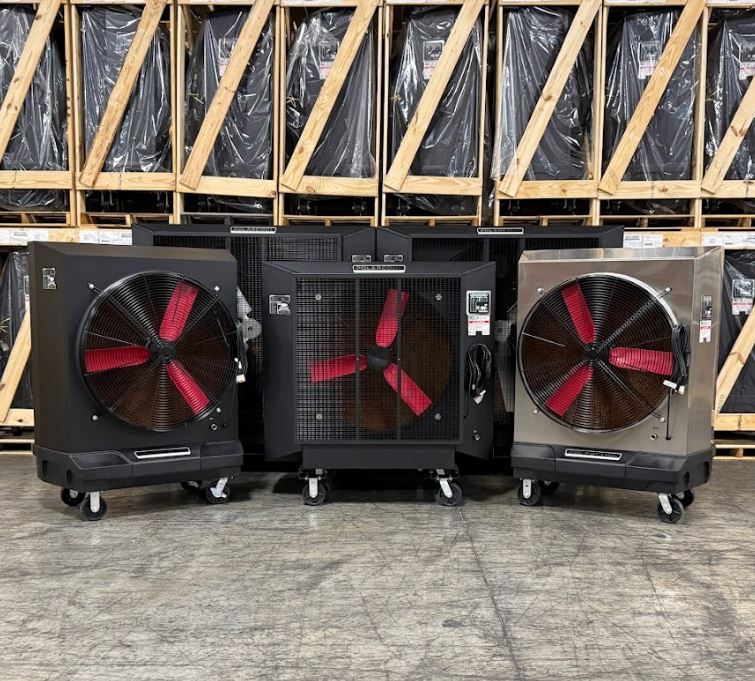
Keeping a warehouse comfortable during the summer months can be a major challenge. High ceilings, large open spaces, loading dock doors, and constant movement of people and equipment often make traditional air conditioning systems expensive and inefficient. In many facilities, cooling the entire building simply isn't practical.
Fortunately, there are effective alternatives. Evaporative cooler fans have become one of the most popular cooling solutions for warehouses because they provide powerful airflow, lower operating costs, and flexible deployment without requiring major HVAC infrastructure.
Whether you're managing a distribution center, manufacturing facility, storage warehouse, or logistics operation, understanding how to cool a warehouse without traditional air conditioning can help improve employee comfort while controlling energy costs.
Unlike offices or retail spaces, warehouses are typically designed for storage, production, and logistics rather than climate control.
Several factors contribute to heat buildup:
Because of these conditions, traditional air conditioning systems often struggle to maintain consistent temperatures. Even when large HVAC systems are installed, conditioned air can quickly escape every time doors open or equipment moves through the facility.
One of the biggest mistakes warehouse operators make is trying to cool the entire air volume of the building.
Consider a warehouse with:
Cooling every cubic foot of air can become extremely expensive. In many cases, employees only occupy a small percentage of the building at any given time.
This is where a more strategic cooling approach becomes valuable.
Instead of trying to cool the entire warehouse, many facilities focus on cooling the areas where employees spend most of their time.
This approach is commonly known as zone cooling.
Typical cooling zones include:
By concentrating airflow where people work, businesses can improve comfort while reducing overall cooling costs.
Evaporative coolers operate differently than traditional air conditioning systems.
Rather than relying on compressors and refrigerants, evaporative coolers use water and airflow to lower air temperature. Warm air passes through water-saturated cooling pads, where evaporation absorbs heat before the cooled air is distributed throughout the space.
This method works especially well in warehouses because:
In many facilities, evaporative coolers provide practical cooling where AC systems struggle to perform economically.
One of the primary reasons warehouses choose evaporative cooling is reduced energy consumption.
Without compressors or complex refrigeration systems, evaporative coolers typically consume significantly less electricity than traditional HVAC equipment.
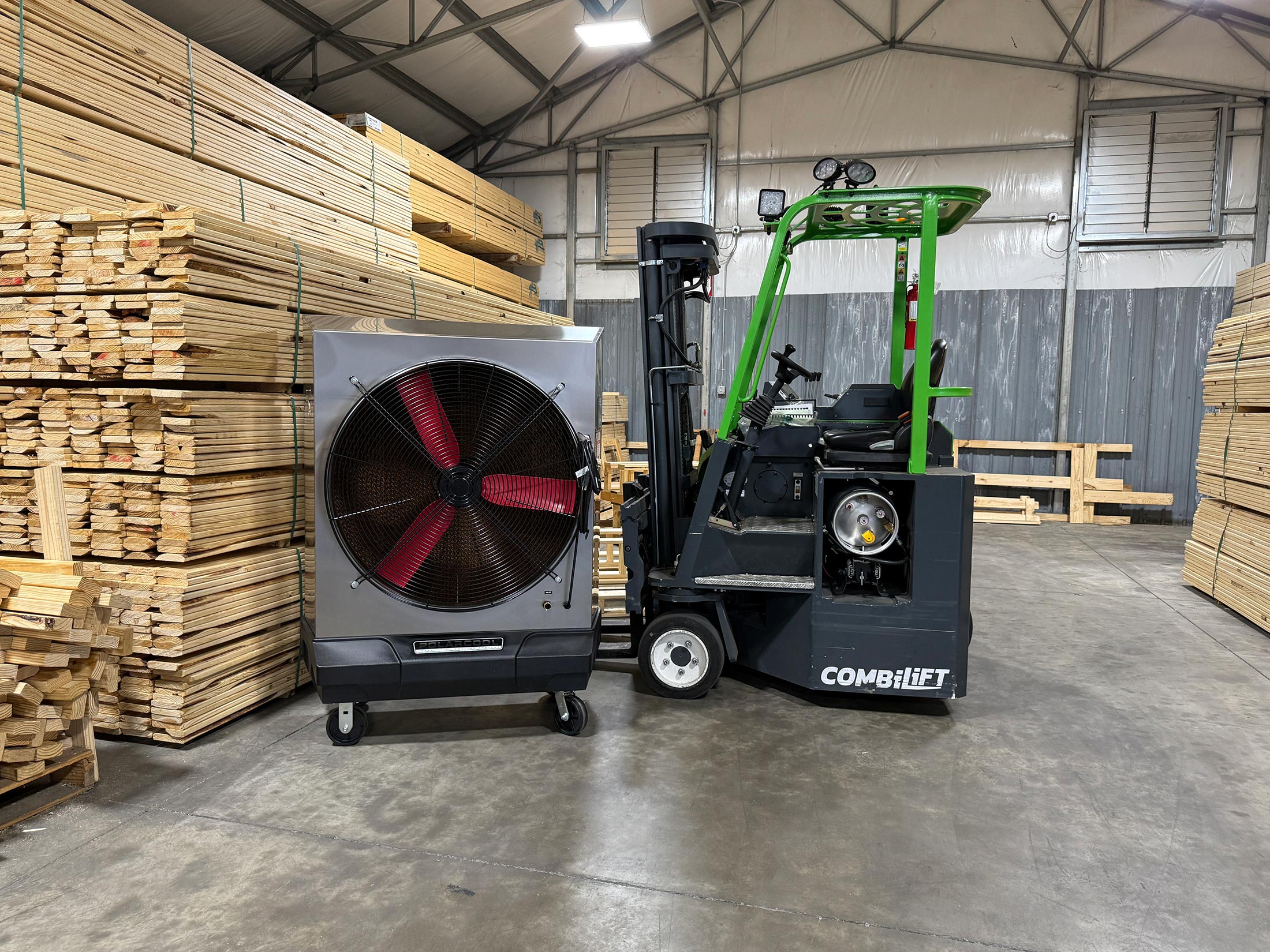
Many evaporative cooler fans can be moved as operational needs change.
This flexibility allows facilities to cool different areas throughout the year or reposition equipment as workflows evolve.
Most portable evaporative coolers require only power and water. There is no need for expensive ductwork, refrigeration lines, or major building modifications.
Even when temperature reduction is modest, increased airflow can significantly improve employee comfort and help reduce heat stress.
Placement plays a major role in warehouse cooling effectiveness.
Many facilities position evaporative coolers near:
Rather than placing one large unit in the center of the building, multiple units are often used to create overlapping cooling zones.
This strategy helps distribute airflow more evenly and improves coverage across larger work areas.
Evaporative coolers perform best when fresh air can move through the building.
Warehouses naturally provide many of the conditions evaporative cooling requires:
These characteristics often make warehouses ideal environments for evaporative cooling solutions.
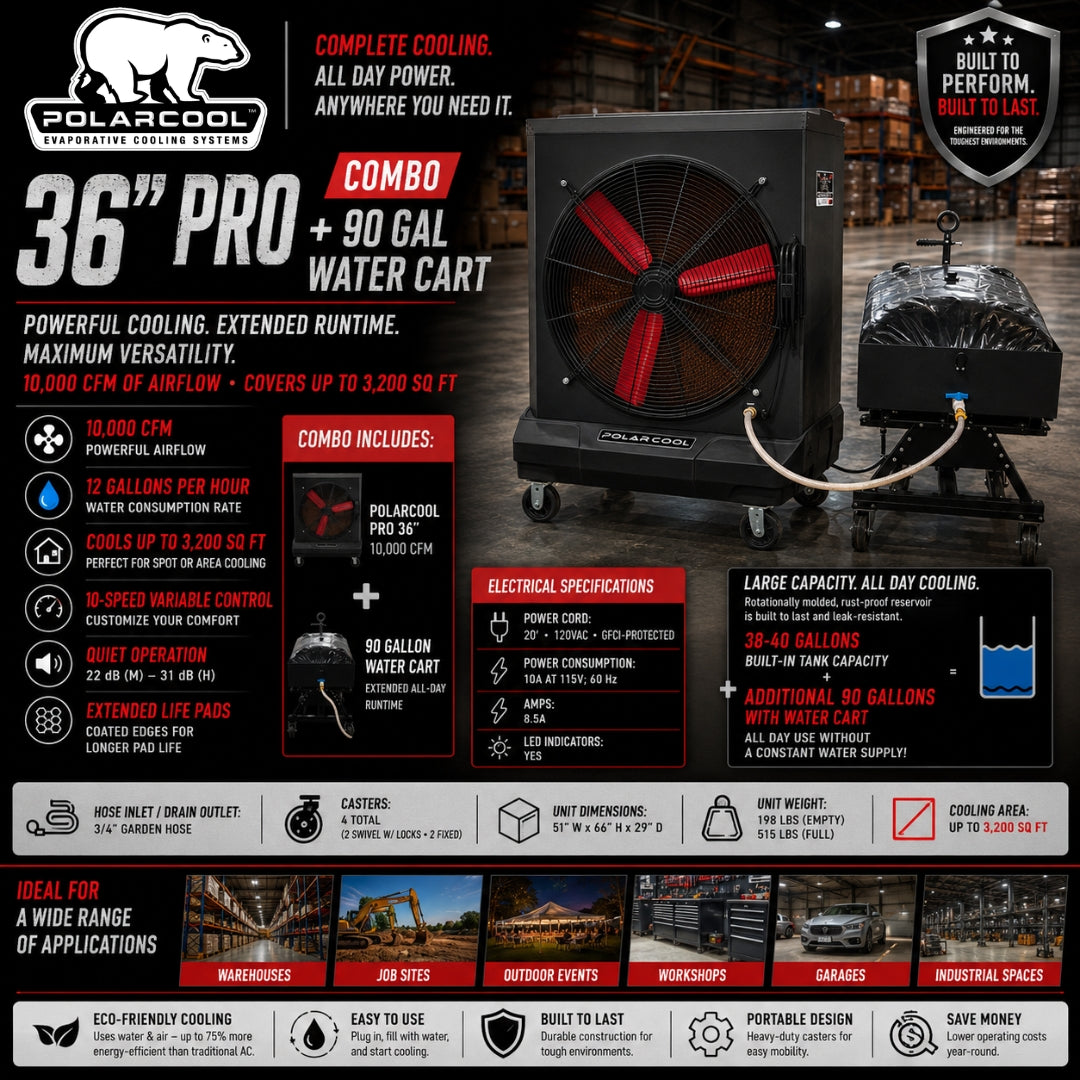
When selecting an evaporative cooler for warehouse applications, consider:
Proper sizing is critical to achieving effective cooling performance.
(Internal Link: How to Size an Evaporative Cooler for Your Space)
Cooling a warehouse without air conditioning is not only possible — it's often the most practical and cost-effective solution. By focusing on zone cooling, improving airflow, and deploying evaporative cooler fans in strategic locations, facilities can create more comfortable working environments while avoiding the high costs associated with large HVAC systems.
For warehouses, distribution centers, manufacturing facilities, and logistics operations, evaporative cooling offers a flexible and energy-efficient alternative that works well in the real-world conditions these facilities face every day.
Related Resources: