Cart
0
You may also like


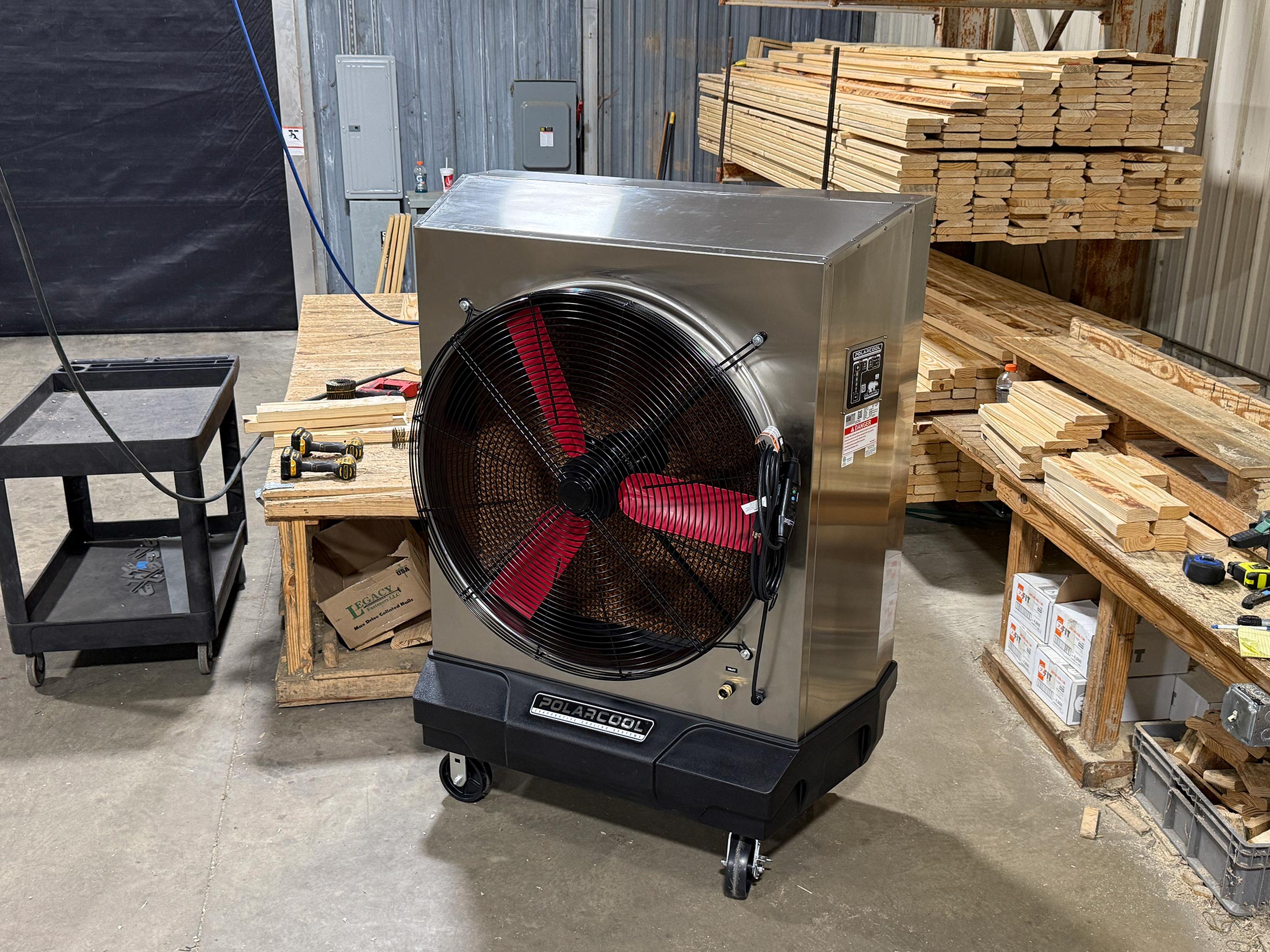
Evaporative cooler fans use a natural heat exchange process to reduce air temperature while consuming far less energy than traditional air conditioning systems. Instead of relying on refrigerants and compressors, evaporative cooling uses water and airflow to create a cooling effect.
The process is simple and efficient:
This continuous flow of fresh, cooled air creates a noticeable drop in temperature while also improving overall air movement.
Unlike traditional AC systems that recirculate indoor air, evaporative coolers depend on airflow. The more air that moves through the space, the more effective the cooling feels.
This is why evaporative cooler fans perform best in:
Proper placement — directing airflow toward people or work zones — can significantly improve performance.
Evaporative cooling is especially effective in dry to moderate humidity climates and in spaces where traditional AC struggles.
Common applications include:
Because these environments are not tightly sealed, airflow-based cooling is often more practical than air conditioning.
Evaporative cooler fans often outperform traditional AC systems in specific situations:
In these scenarios, evaporative cooling delivers consistent comfort without the expense and complexity of full HVAC systems.
Evaporative cooler fans offer several practical benefits:
These advantages make them a preferred solution across many commercial and industrial applications.
Evaporative cooler fans provide a simple, efficient way to cool spaces that are difficult or expensive to manage with traditional air conditioning. By combining airflow and evaporation, they deliver reliable performance in warehouses, garages, outdoor areas, and other open environments.
For best results, focus on proper sizing, placement, and ventilation.