Cart
0
You may also like


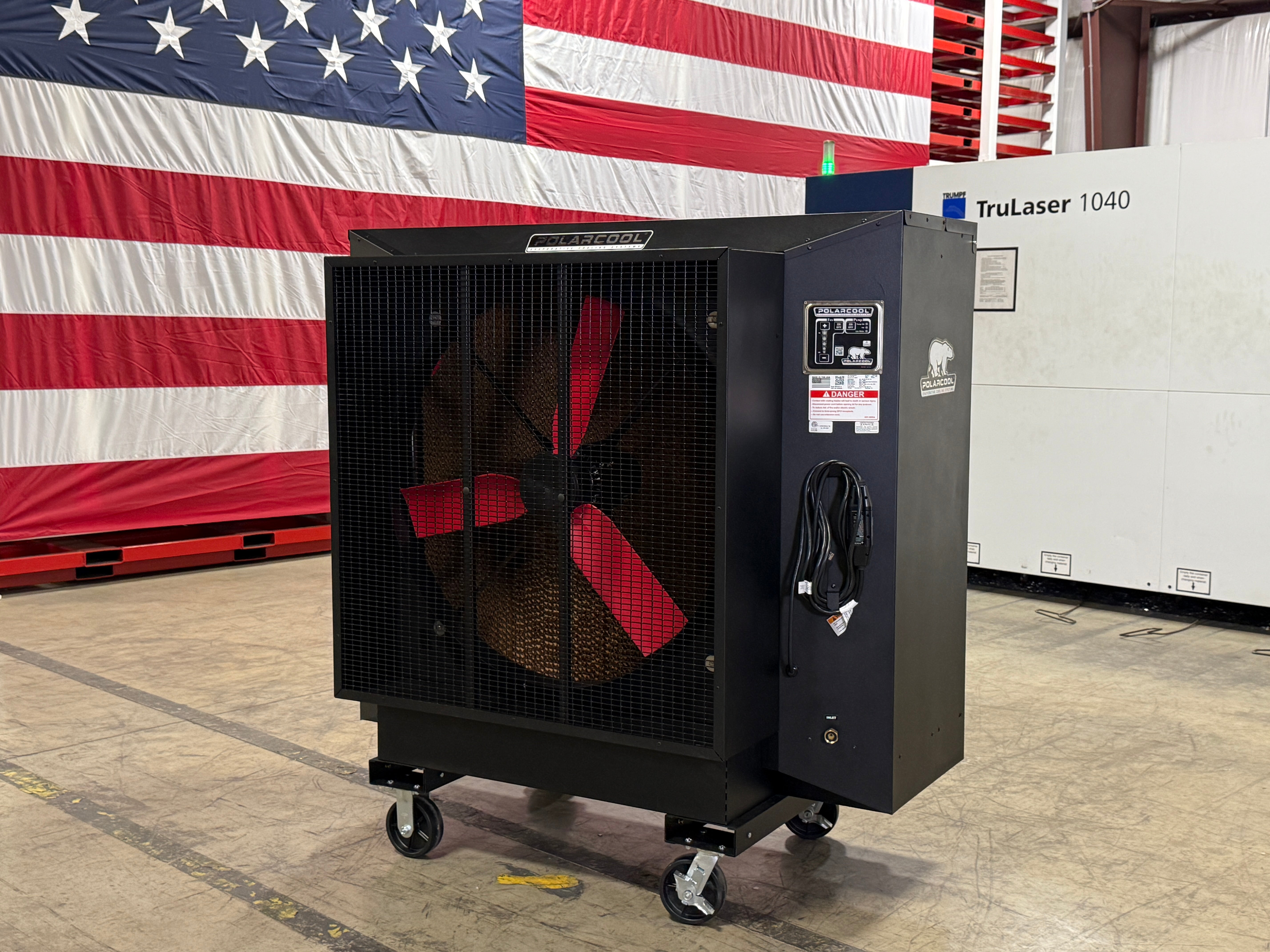
Purchasing an evaporative cooler fan can be one of the most cost-effective ways to improve comfort in warehouses, garages, workshops, manufacturing facilities, and outdoor spaces. However, choosing the wrong unit or using it incorrectly can lead to disappointing results.
The good news is that most evaporative cooling issues are avoidable. Understanding a few key factors before making a purchase can help ensure you select the right equipment for your environment and achieve the cooling performance you expect.
Here are some of the most common evaporative cooler buying mistakes and how to avoid them.
One of the biggest mistakes buyers make is selecting a cooler that does not provide enough airflow for the area they need to cool.
Evaporative coolers are typically rated by airflow, measured in CFM (cubic feet per minute). A unit that is undersized for the space may struggle to move enough air to create an effective cooling zone.
Before purchasing, consider:
Larger spaces generally require higher airflow ratings and, in some cases, multiple units working together.
(Internal Link: How to Size an Evaporative Cooler for Your Space)
Evaporative coolers and traditional air conditioners work very differently.
Air conditioners:
Evaporative coolers:
Many first-time buyers expect evaporative coolers to produce the same results as a residential air conditioning system. In reality, evaporative cooling is designed to improve comfort through airflow and temperature reduction in open or semi-open environments.
Understanding this difference helps set realistic expectations and leads to greater satisfaction with the equipment.
Evaporative cooling depends on airflow.
For maximum performance, fresh air must be able to enter the space while warmer air exits.
Common examples include:
Without adequate ventilation, humidity can build up and reduce cooling effectiveness.
This is one reason evaporative coolers perform so well in warehouses, manufacturing facilities, workshops, and outdoor environments.
It's tempting to compare units based solely on price, but cooling performance should be the primary consideration.
Important factors include:
A lower-cost unit may save money initially, but it may not provide adequate airflow or durability for demanding commercial and industrial applications.
When evaluating options, consider the long-term value and suitability for your specific environment.
Even the best evaporative cooler can underperform if it is placed incorrectly.
For optimal results:
Many facilities improve performance by strategically placing multiple units throughout the workspace rather than relying on a single cooler.
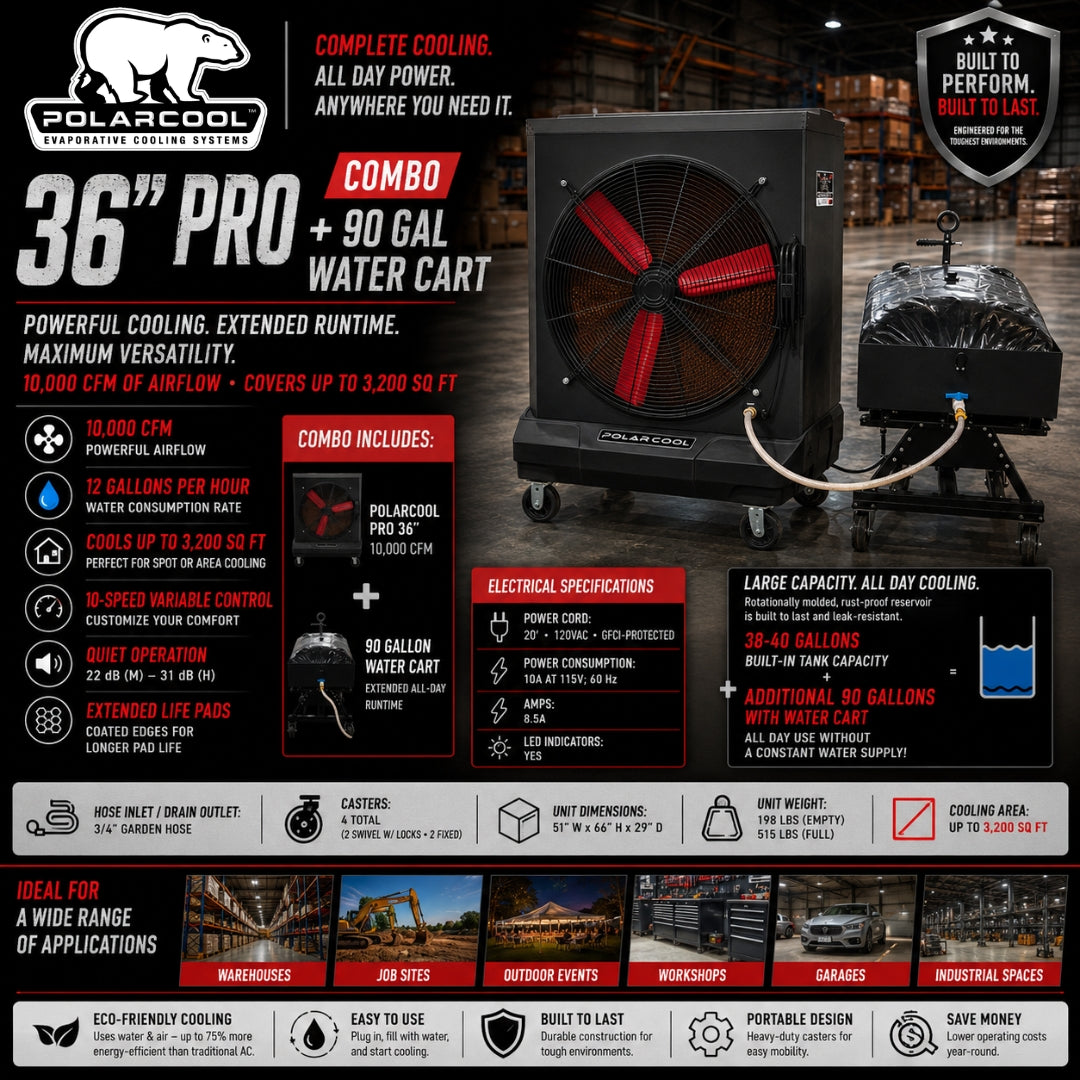
Water capacity directly affects runtime.
A larger reservoir typically means:
This becomes particularly important in warehouses, manufacturing facilities, and outdoor work environments where units may operate continuously for extended periods.
Cooling requirements often change over time.
A growing warehouse, expanding production floor, or evolving workspace may require additional airflow in the future.
Portable evaporative cooler fans provide flexibility because they can be repositioned, supplemented with additional units, or redeployed to new work areas as needs change.
Planning ahead helps protect your investment and ensures long-term usability.
Before making a purchase, ask yourself:
Answering these questions will help narrow your options and guide you toward the best solution for your environment.
Evaporative cooler fans provide an efficient and cost-effective cooling solution for a wide range of applications. By understanding airflow requirements, ventilation needs, and proper placement strategies, buyers can avoid common mistakes and achieve significantly better results.
Whether you're cooling a warehouse, garage, workshop, manufacturing facility, or outdoor space, selecting the right evaporative cooler from the beginning will help maximize comfort, improve productivity, and deliver long-term value.
Related Resources: