Cart
0
You may also like


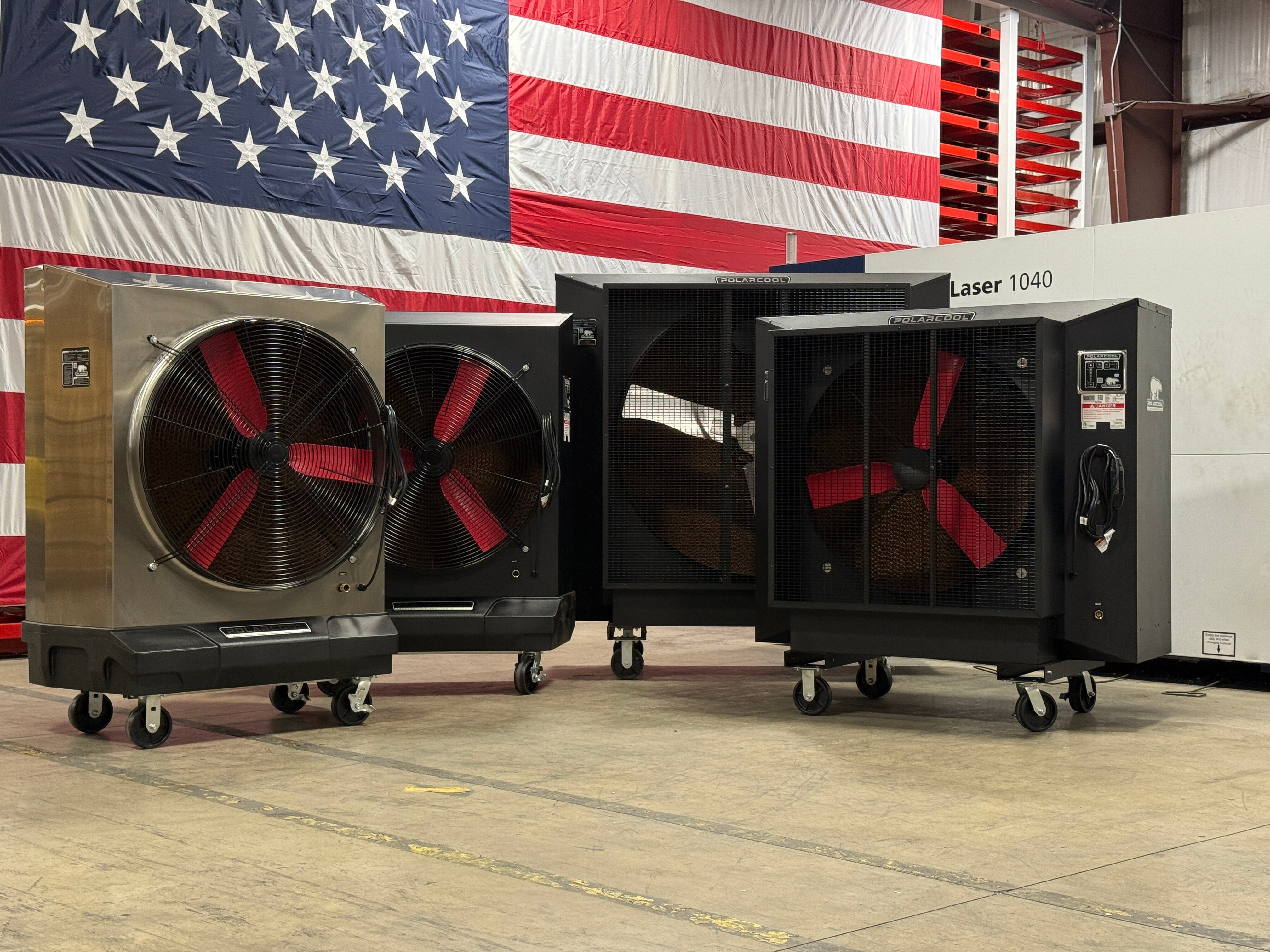
Still, an evaporative cooler in high humidity can offer meaningful comfort. Even in humid conditions, you can achieve temperature drops of 10–13°F—especially during peak heat when relative humidity naturally decreases. Warm air holds more water vapor, so while the absolute moisture remains the same, the percentage of saturation drops, making the air feel drier relative to its capacity.
Pairing a swamp cooler with increased airflow boosts its efficiency. Moving air creates a “wind chill” effect, reducing the effective temperature and improving indoor comfort. Laboratory studies indicate that every 1.8°F drop in effective temperature can increase productivity by 5% in workplaces above 79°F. This combination provides energy-efficient cooling that keeps both workers and customers comfortable.
Even small reductions in temperature can have a big impact. Comfortable employees maintain higher productivity, and customers stay longer when indoor conditions feel pleasant. In humid climates, maximizing every degree of cooling is key to effective climate control.
While an evaporative cooler in high humidity isn’t a magic solution, strategic use with airflow and ventilation can deliver measurable comfort. It’s a cost-effective, energy-efficient option to improve indoor comfort in heat, maintain productivity, and create a more pleasant environment—making it worth considering even in challenging humid climates.