Cart
0
You may also like


Every summer, the heat puts pets at genuine risk. Dogs, cats, and backyard animals can't tell you when they're struggling — and by the time heat stress becomes obvious, the situation may already be serious. Evaporative cooling is one of the most effective and affordable tools pet owners have, and PolarCool fans are increasingly being used in garages, barns, kennels, and outdoor spaces to keep animals safe when temperatures climb.
Humans sweat across almost the entire body surface — a highly efficient system for shedding heat. Dogs and cats have a very limited ability to sweat; dogs can only sweat through glands in their paw pads, which provides negligible cooling. Instead, they rely primarily on panting: drawing air across moist surfaces in the mouth and upper respiratory tract to cool the blood through evaporation. It works, but it's far less efficient than full-body sweating.
Texas A&M's College of Veterinary Medicine notes that once air humidity reaches around 85%, evaporative cooling through panting is almost completely inhibited. In hot, humid conditions, a dog can reach the point where panting provides almost no relief at all — and body temperature climbs rapidly.
Normal canine and feline body temperature runs between 101°F and 102°F. When it climbs to 104°F, heatstroke becomes a genuine emergency. The window between "uncomfortably warm" and "medical crisis" is short and narrows quickly.
• Brachycephalic (flat-faced) breeds: Bulldogs, pugs, Boston terriers, boxers, Persian cats, and similar breeds have compressed airways that severely limit panting efficiency. These animals can overheat in conditions that barely affect a Labrador or mixed breed.
• Senior and very young animals: Older pets have diminished thermoregulation; puppies and kittens haven't fully developed theirs yet.
• Overweight pets: Excess body mass generates more heat and makes dissipation harder.
• Animals with health conditions: Heart disease, respiratory disorders, and other systemic conditions all compromise heat management.
• Pets in garages, sheds, or outdoor kennels: These spaces can trap heat far exceeding outdoor temperatures, with no shade or ventilation to provide relief.
Veterinary guidelines are consistent: cooling should begin before transport, not after. Peer-reviewed research confirms that animals cooled prior to reaching a clinic have significantly better survival outcomes. Knowing the signs can make the difference between a full recovery and a tragedy:
• Intense, rapid, heavy, or unusual panting
• Excessive drooling or hypersalivation
• Lethargy, weakness, or staggering
• Vomiting or diarrhea
• Red or darkened gums
• Glazed eyes or visible disorientation
If you observe these signs, move your pet to a shaded, ventilated area immediately. Apply cool water and direct airflow over them. Then seek emergency veterinary care — even if the animal appears to recover, internal organ damage can occur without visible symptoms.
The same physical process that helps dogs cool themselves through panting is the principle behind evaporative cooling. When air moves across a wet surface and water evaporates, heat is drawn from the surrounding environment, substantially dropping the ambient temperature. A PolarCool fan can reduce air temperature by 10 to 20°F under typical conditions — and more in drier climates.
That temperature difference is meaningful for an animal that can't efficiently self-regulate. Proactive cooling — keeping the environment comfortable all day — is always more effective than reactive cooling after the animal is already stressed.
Evaporative cooling combined with airflow is the recommended veterinary method for treating heat stress in dogs. A PolarCool fan makes that same powerful cooling available proactively — all day, every day of the season.
• Garages and workshops: Common spaces where dogs wait with their owners. Without cooling, garage temperatures can far exceed outdoor temperatures. A PolarCool transforms these spaces into genuinely comfortable environments.
• Outdoor kennels and dog runs: PolarCool fans work outdoors wherever there's an electrical connection and fresh air, delivering spot and area cooling that a standard fan cannot.
• Horse barns and stables: Horses generate substantial body heat. Positioned at stall level, a PolarCool fan delivers the moving, cooled air that supports equine thermoregulation through summer. Our customers have reported tremendous satisfaction using PolarCool fans in barn settings.
• Chicken coops and small animal housing: Heat stress is a welfare and productivity concern for poultry and small animals. Evaporative cooling in well-ventilated outbuildings provides real summer relief.
• Veterinary clinics and boarding facilities: As practitioners note, cool animals are less stressed and behave better — and the staff benefits just as much as the animals.
• Grooming stations and training areas: Working animals and their handlers benefit equally from reduced ambient heat.
A regular box fan or pedestal fan moves air — but it doesn't reduce its temperature. In extreme heat, a regular fan blowing hot air can actually accelerate dehydration in pets. A PolarCool physically lowers the temperature of the air before delivering it, using evaporation through a saturated media pad. That's a fundamentally different and more effective form of cooling — which is why evaporative coolers are recommended by veterinary professionals for managing heat stress in animals.
• Always ensure access to fresh, cool drinking water — pets drink far more in hot weather.
• Position your PolarCool where pets spend the most time, not just near your own workspace.
• Combine evaporative cooling with shade. Direct sun dramatically increases heat load on animals.
• Walk dogs during early morning or evening hours. Midday pavement can reach temperatures that burn paw pads — if it's too hot for your hand, it's too hot for their feet.
• Never leave pets in parked vehicles, even briefly. Interior temperatures can become fatal within minutes.
• Start cooling in the morning. Building a comfortable baseline early is far easier than recovering from afternoon peak heat.
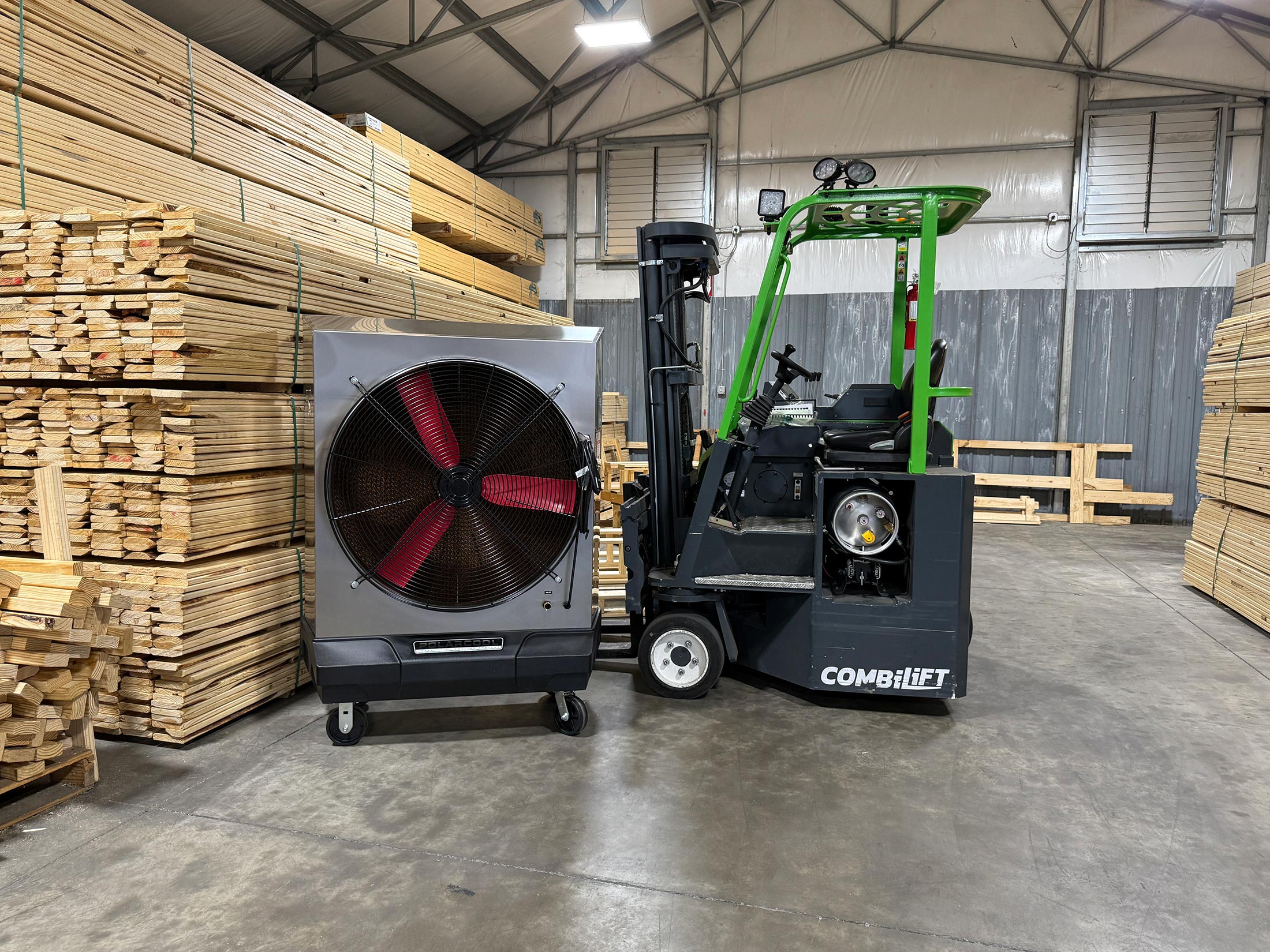
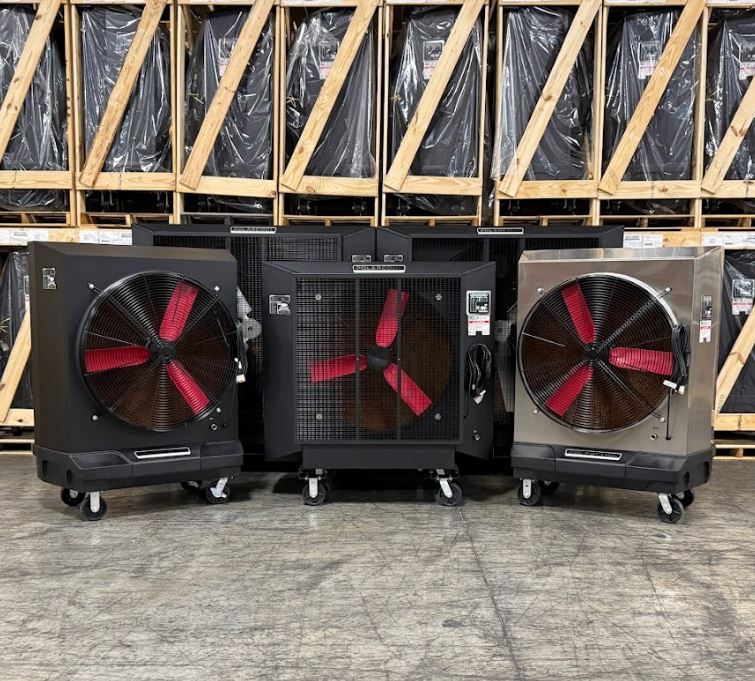
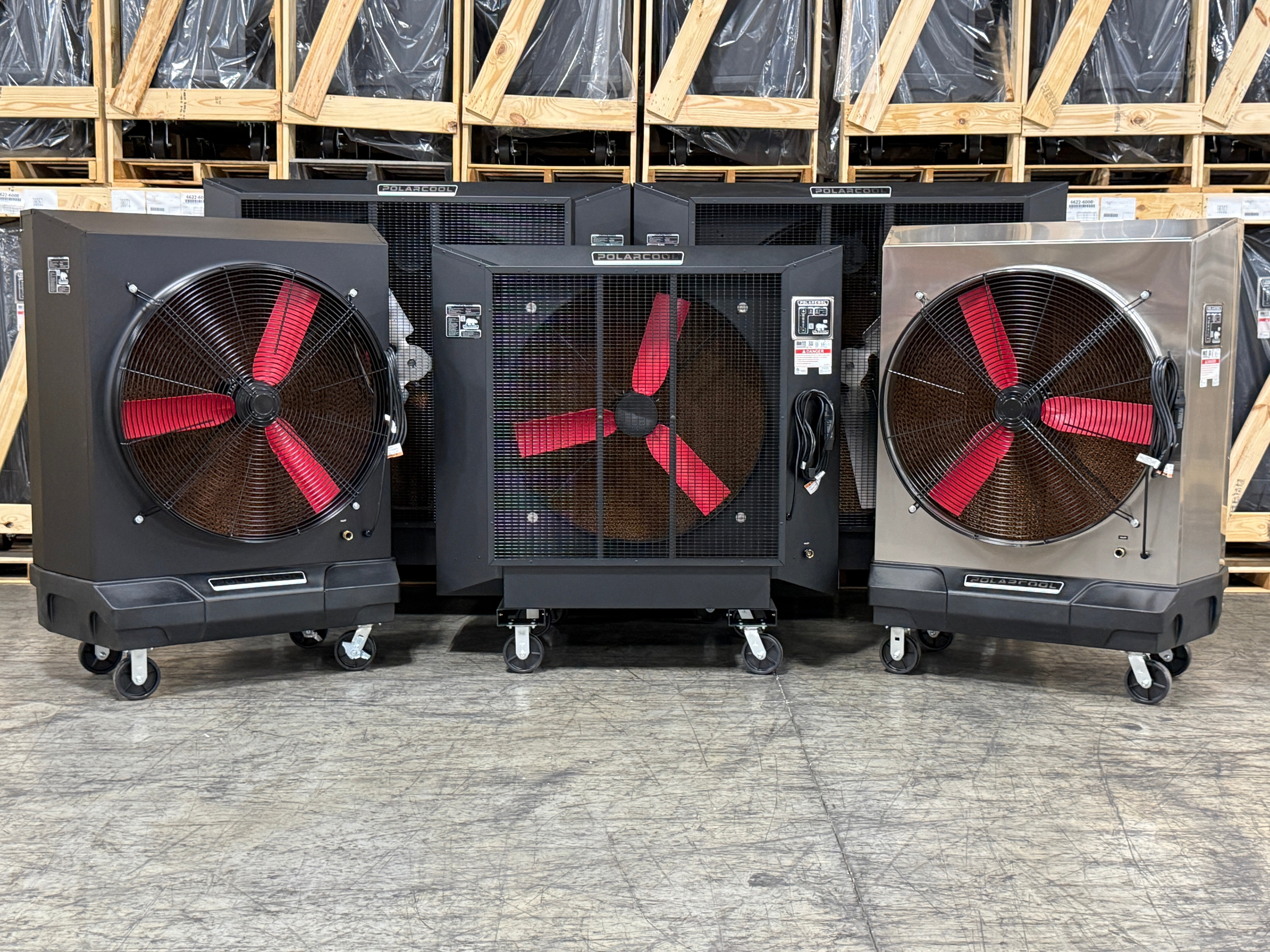
For barns, kennels, coops, stables, and any space where animals live and work, PolarCool recommends the stainless steel cabinet option. Animal environments are demanding: moisture, manure, cleaning chemicals, and daily wear accelerate corrosion on standard metal surfaces. PolarCool's stainless steel models are built to handle exactly that. The cabinet resists rust and pitting, wipes clean easily between uses, and maintains its structural integrity season after season — even in the humid, high-moisture conditions that livestock spaces produce. When you're investing in equipment that lives in an animal environment, stainless is the right choice.
For any animal application — kennels, barns, stalls, grooming stations, or coops — choose the PolarCool stainless steel model. It's built to handle moisture, cleaning, and the demands of a working animal environment.
Your pets depend on you to manage their environment safely. A PolarCool evaporative cooler is one of the most effective, energy-efficient, and affordable tools available for doing exactly that. Browse the full lineup at polarcool.net or call 1-888-765-5732. In-stock units ship next day to all 48 lower U.S. states.