Cart
0
You may also like



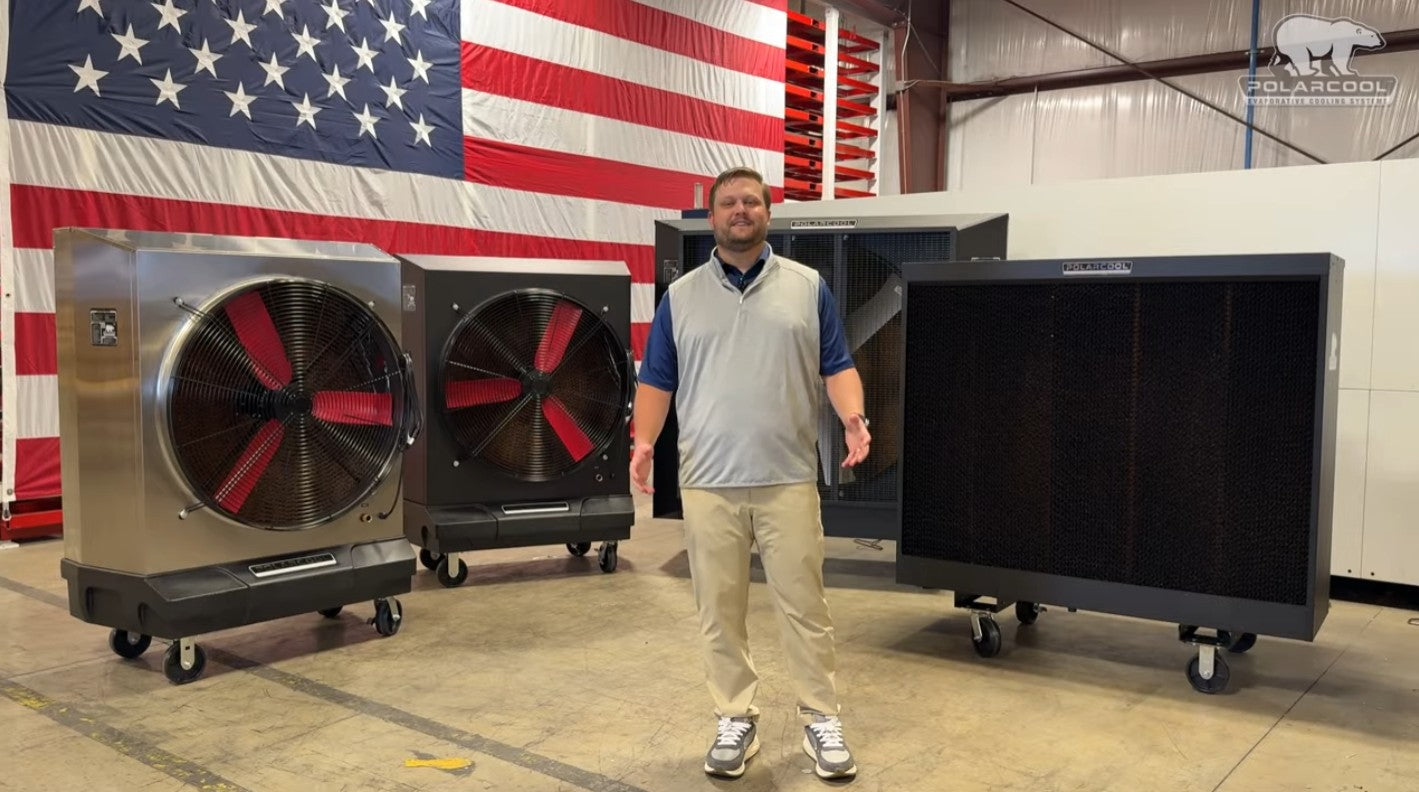
Whether you're working on vehicles, woodworking projects, equipment maintenance, or simply spending time in your garage, summer heat can quickly make the space uncomfortable. Garages are often one of the most difficult areas of a home or shop to cool effectively. They typically have limited insulation, large doors that open frequently, and little airflow compared to other parts of a building.
Traditional air conditioning can help in some situations, but it is often expensive to install and operate, especially in larger garage spaces. That's why many homeowners, hobbyists, mechanics, and shop owners turn to evaporative cooler fans as a practical and cost-effective cooling solution.
Unlike living spaces, garages are not usually designed with comfort in mind. Heat enters through metal garage doors, uninsulated walls, windows, and roofing materials. Add in vehicles, power tools, equipment, and direct sunlight, and temperatures can climb quickly.
Many garages also have doors opening throughout the day, allowing cooled air from traditional air conditioning systems to escape. This constant exchange of air can make AC systems work harder while increasing energy costs.
Evaporative cooler fans address these challenges differently by focusing on airflow and evaporative cooling rather than trying to maintain a sealed environment.
Evaporative coolers use water and airflow to reduce air temperature. Warm air is drawn through water-saturated cooling pads where evaporation naturally lowers the air temperature before it is circulated into the space.
This cooling method is particularly effective in garages because they often provide the ventilation and airflow that evaporative cooling systems need to perform efficiently.
Instead of recirculating the same air repeatedly, evaporative coolers continuously move fresh air through the space while helping reduce heat buildup.
Garage owners choose evaporative cooler fans for several reasons:
Evaporative coolers typically use far less electricity than traditional air conditioning systems. Because they don't rely on compressors or refrigerants, energy consumption is significantly reduced.
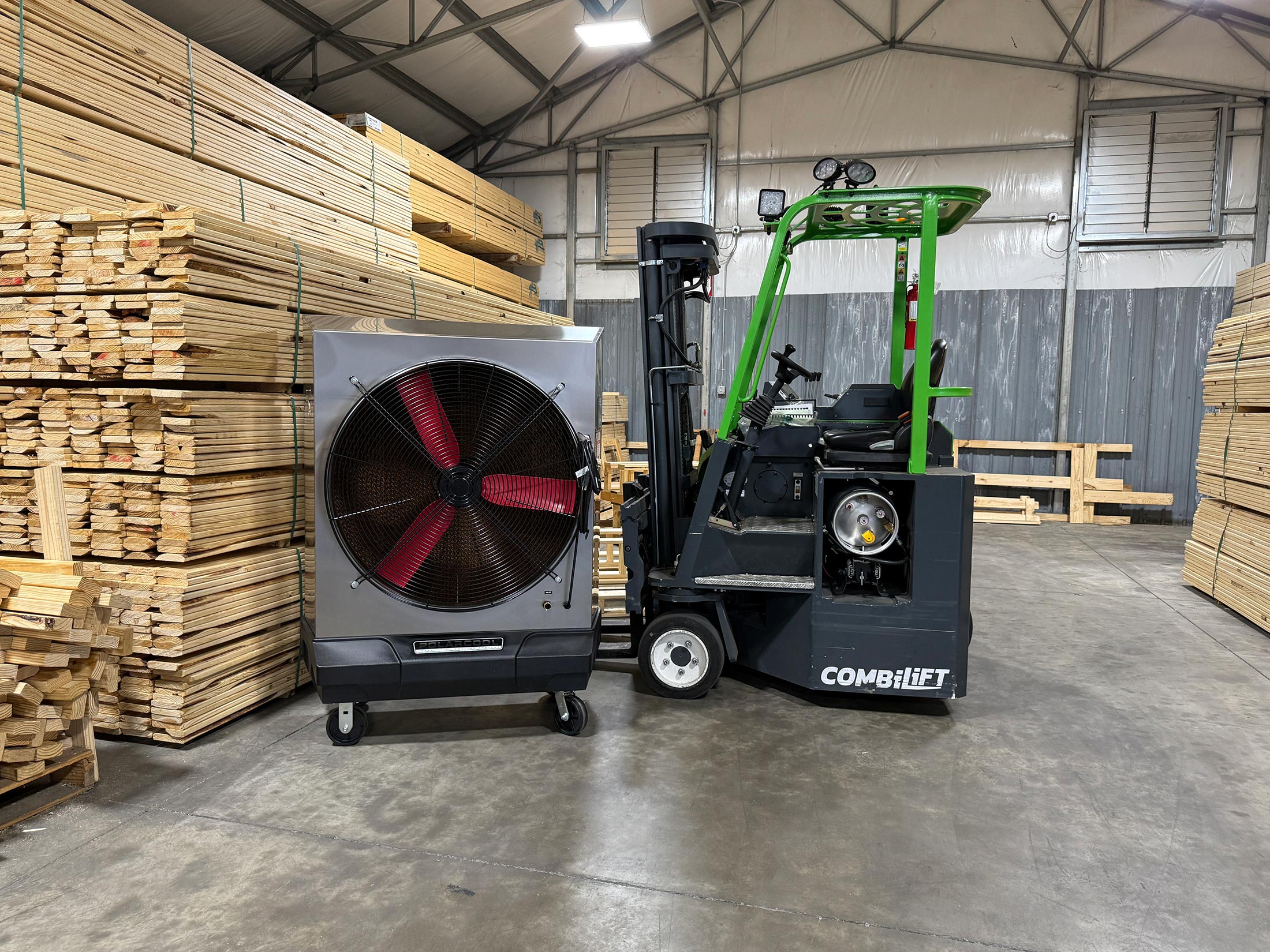
Most evaporative cooler fans can be moved wherever cooling is needed. Whether you're working near a vehicle lift, workbench, welding station, or storage area, airflow can be directed exactly where it provides the most benefit.
Unlike traditional HVAC systems, evaporative coolers require no ductwork or major installation. Most units simply need power and water to begin operating.
Many garages become uncomfortable not only because of heat but because of stagnant air. High-airflow evaporative coolers help keep air moving throughout the workspace, creating a more comfortable environment.
Not every garage has the same cooling requirements. When evaluating different evaporative cooler models, there are several important factors to consider.
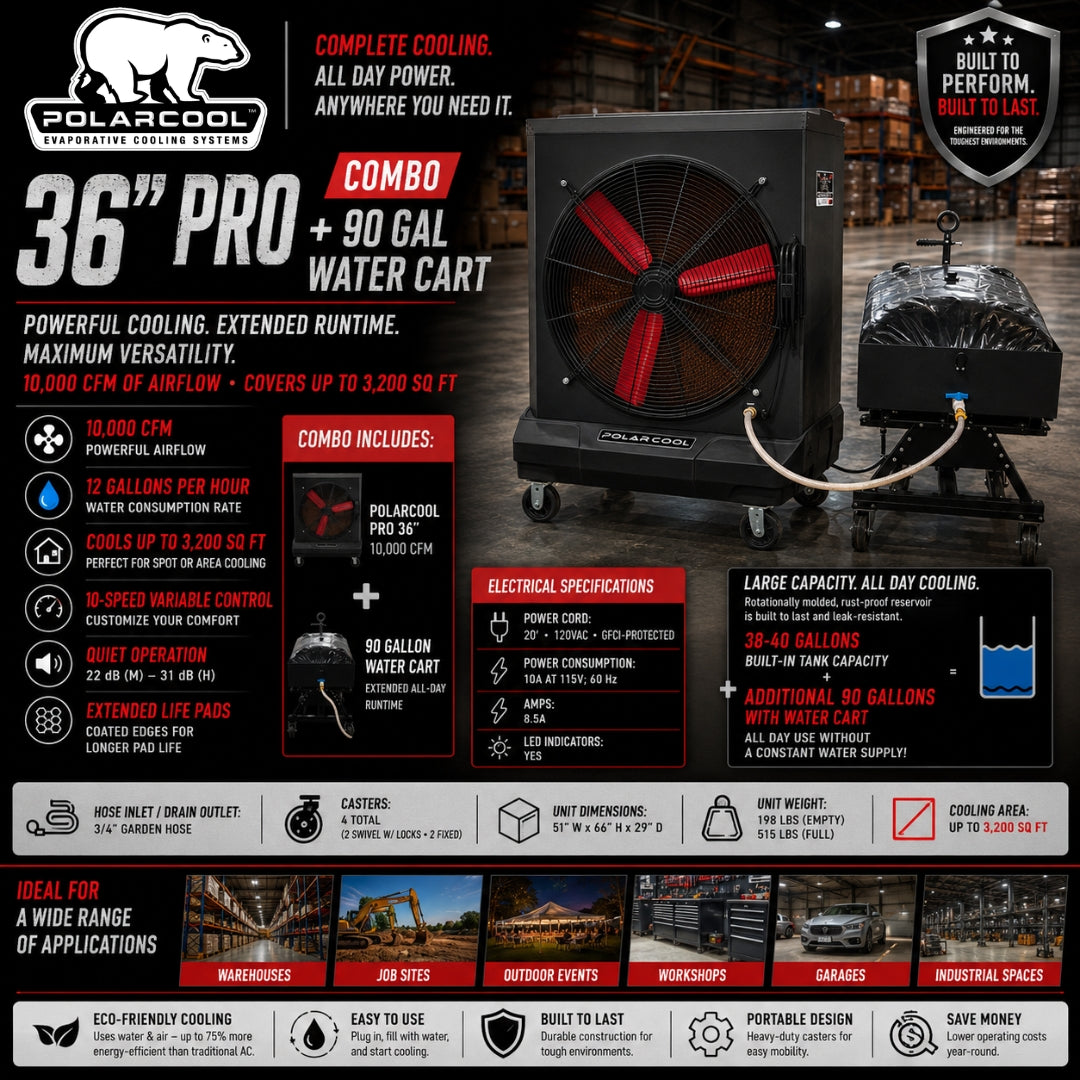
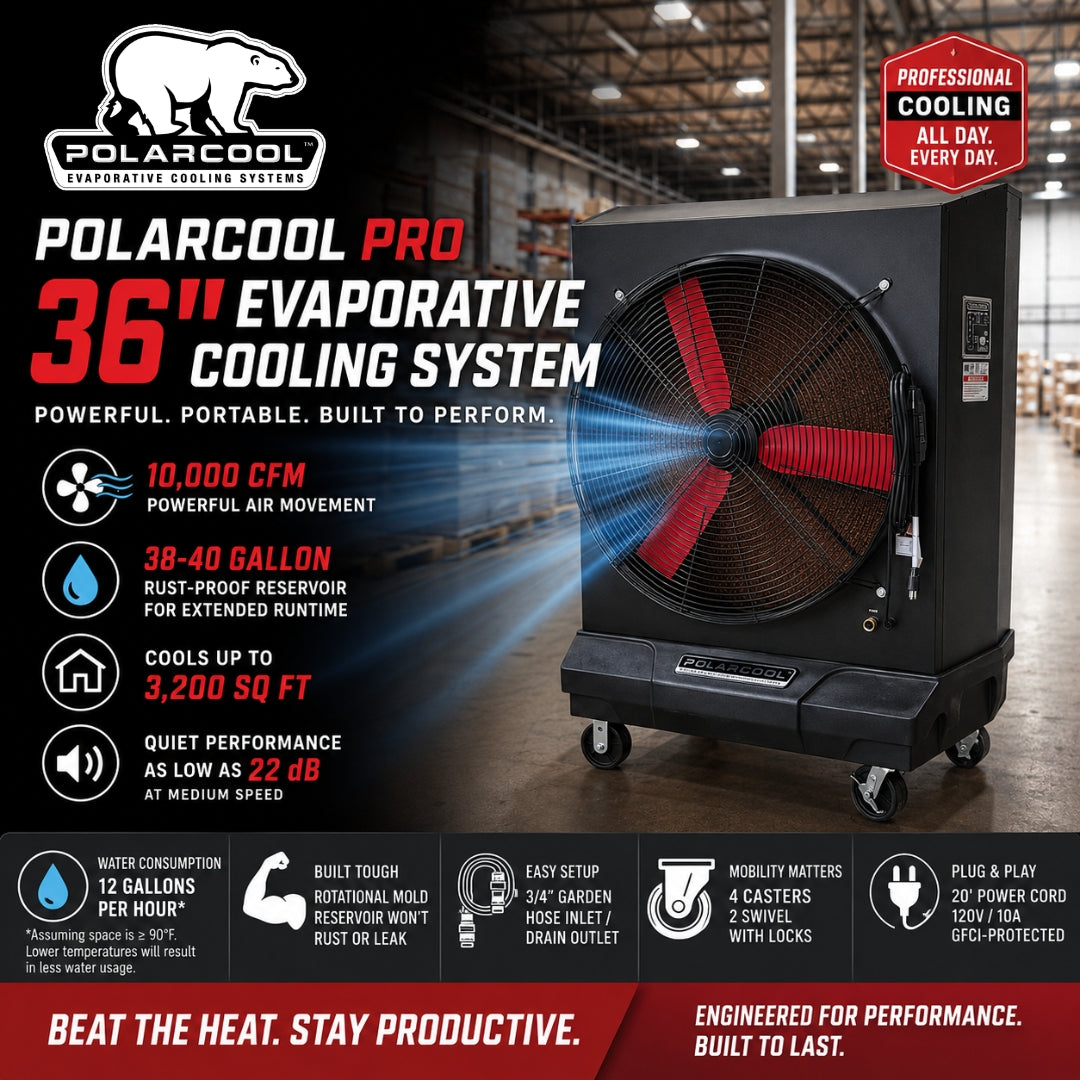
CFM, or cubic feet per minute, measures the volume of air a fan can move. Larger garages typically require higher airflow ratings to achieve effective cooling.
A small residential garage may need significantly less airflow than a multi-bay automotive shop or commercial workshop.
Larger tanks allow longer operating times between refills. If you plan to run your cooler throughout the day, reservoir capacity becomes an important consideration.
Being able to direct airflow toward specific work areas improves cooling effectiveness and overall comfort.
Heavy-duty casters and portable designs make it easier to reposition cooling where it is needed most.
Garages and workshops can be demanding environments. Durable housings and quality components help ensure long-term reliability.
Evaporative cooler fans are commonly used in:
These environments benefit from strong airflow and targeted cooling without the expense of installing large HVAC systems.
To maximize cooling performance:
Proper ventilation allows the cooler to continuously introduce fresh air while exhausting warmer air from the space.
Garages and workshops present unique cooling challenges, but evaporative cooler fans offer an effective solution for many applications. By combining airflow with evaporative cooling technology, these systems provide energy-efficient comfort while remaining easy to install and operate.
Whether you're cooling a residential garage, automotive shop, or professional workspace, choosing the right evaporative cooler fan can help create a more productive and comfortable environment throughout the hottest months of the year.
Related Resources: