Cart
0
You may also like


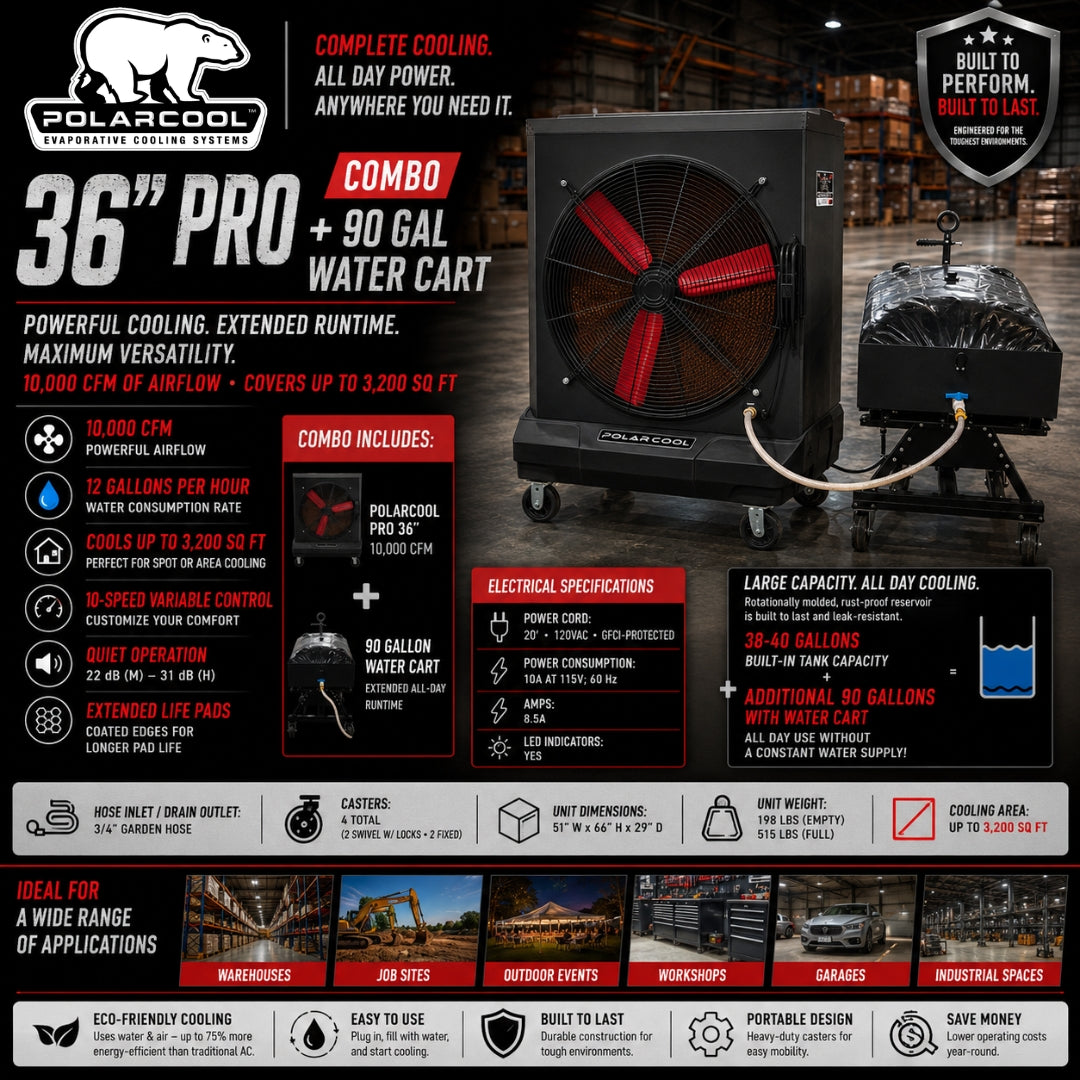

Manufacturing facilities face unique cooling challenges that often make traditional air conditioning difficult and expensive to implement. Large production floors, heat-generating equipment, open dock doors, and high ceilings can create uncomfortable working conditions, especially during the summer months.
For many manufacturers, maintaining a comfortable work environment is about more than employee comfort. Excessive heat can impact productivity, worker morale, equipment performance, and overall operational efficiency. That's why industrial evaporative cooler fans have become a popular cooling solution in manufacturing environments across a wide range of industries.
By combining powerful airflow with evaporative cooling technology, these systems provide an effective and energy-efficient way to reduce heat in production areas without the high costs associated with traditional HVAC systems.
Unlike office buildings, manufacturing plants constantly generate heat from equipment, machinery, lighting, and production processes.
Common heat sources include:
As temperatures rise, employees can become uncomfortable, fatigue can increase, and overall productivity may decline.
Cooling these environments effectively requires a solution designed for large, open spaces.
While air conditioning works well in climate-controlled offices and enclosed spaces, manufacturing environments often present obstacles that reduce HVAC efficiency.
Common challenges include:
In many facilities, cooled air escapes almost as quickly as it is produced, forcing HVAC systems to work harder and increasing energy costs.
This is where evaporative cooling offers a significant advantage.
Industrial evaporative coolers use water and airflow to lower air temperature naturally.
The process is simple:
Unlike air conditioning systems, evaporative coolers do not rely on refrigerants or compressors. This allows them to provide cooling while consuming significantly less electricity.
Employees working near machinery, production lines, and fabrication equipment are often exposed to elevated temperatures throughout the day.
Evaporative cooler fans help create more comfortable work zones by delivering cooled airflow directly where employees need it most.
Energy consumption is a major concern for manufacturing operations.
Because evaporative coolers use fan motors and water pumps rather than compressor-based refrigeration systems, they generally require less energy to operate than traditional air conditioning.
Manufacturing layouts change over time. Production lines are moved, workstations are expanded, and equipment is relocated.
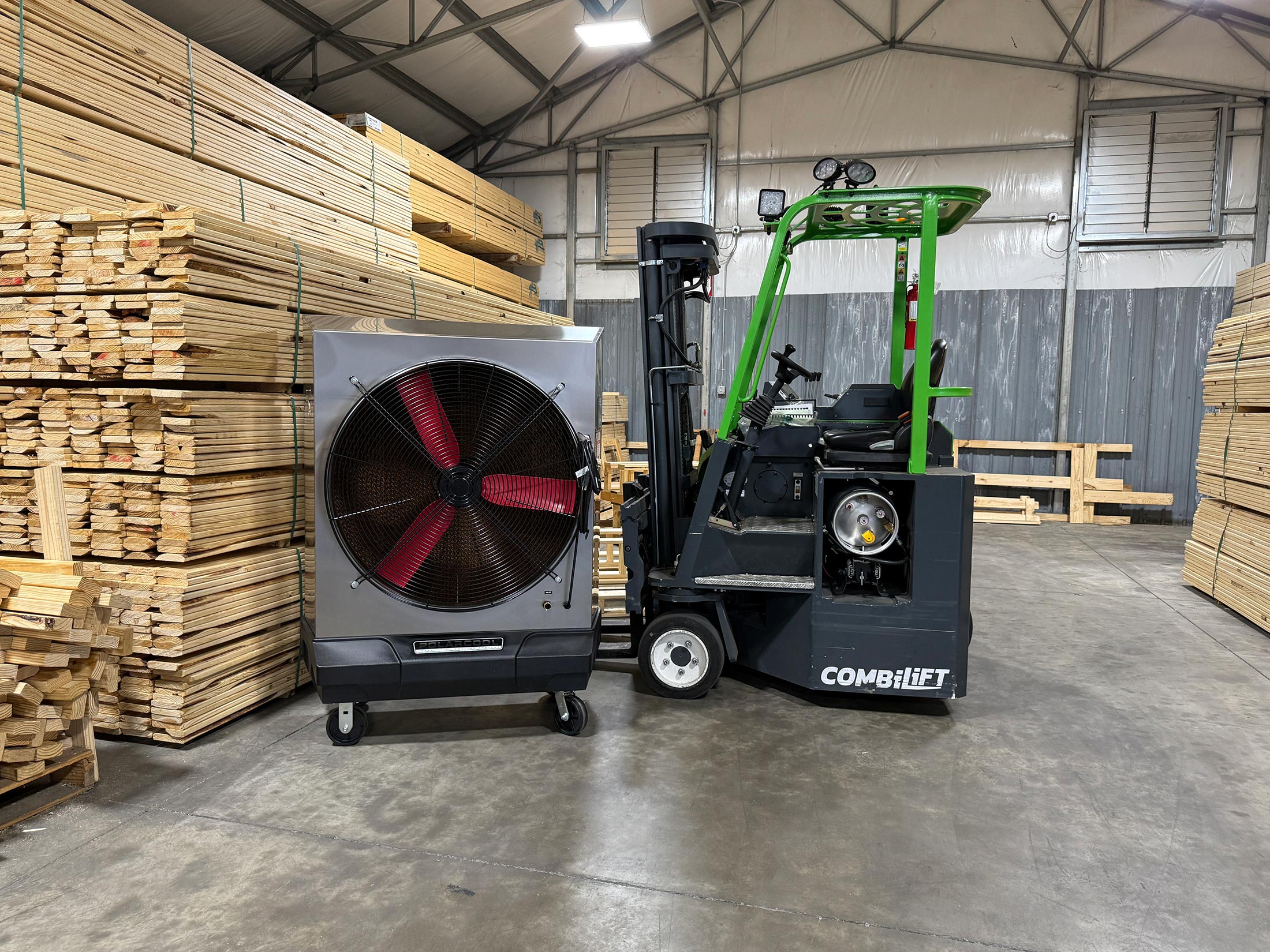
Portable evaporative coolers can be repositioned as facility needs evolve, providing cooling flexibility that permanent HVAC systems cannot offer.
Most industrial evaporative coolers require only access to power and water. This allows facilities to deploy cooling quickly without major construction or infrastructure upgrades.
Industrial evaporative coolers are commonly used in:
Assembly stations often concentrate employees in specific work zones. Cooling these areas directly can improve comfort and productivity.
Welding, machining, and metalworking operations generate significant heat. High-airflow evaporative coolers help reduce heat stress while improving air circulation.
These areas frequently experience temperature fluctuations due to loading dock activity and continuous movement of products and personnel.
Maintenance shops and equipment repair bays benefit from portable cooling that can be directed where technicians are working.
One of the most effective cooling strategies in manufacturing environments is zone cooling.
Instead of attempting to cool an entire facility, businesses focus on areas where employees spend the majority of their time.
Examples include:
This targeted approach often provides better comfort while reducing overall cooling costs.
When selecting an evaporative cooler for manufacturing applications, consider:
Proper sizing is essential for achieving optimal performance.
(Internal Link: How to Size an Evaporative Cooler for Your Space)
A comfortable workplace can contribute to improved focus, reduced fatigue, and increased productivity. While every facility is different, many manufacturers find that improved airflow and cooling create a more comfortable environment during peak summer conditions.
By strategically deploying evaporative coolers throughout production areas, facilities can support employee comfort while maintaining operational efficiency.
Industrial evaporative coolers offer manufacturing facilities a practical, energy-efficient solution for managing heat in large, open environments. From assembly lines and fabrication shops to packaging areas and equipment bays, these systems provide flexible cooling that adapts to changing operational needs.
For manufacturers looking to improve airflow, reduce heat stress, and control cooling costs, evaporative cooler fans continue to be one of the most effective solutions available.
Related Resources: