Cart
0
You may also like


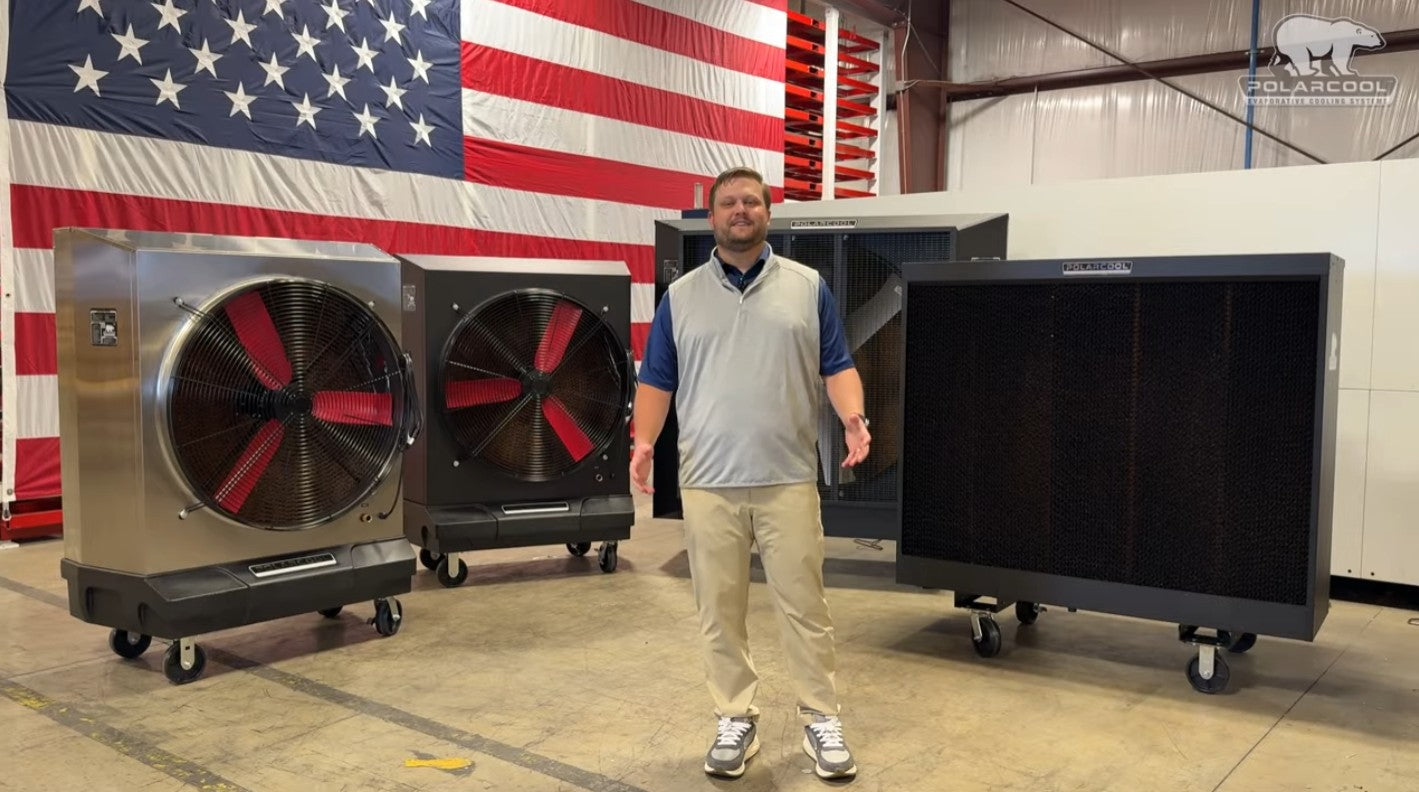
One of the most common questions people ask when considering an evaporative cooler fan is whether it can be used indoors, outdoors, or both. The answer is yes — evaporative coolers are effective in both environments when used correctly. However, understanding how airflow, ventilation, and humidity affect performance is essential to getting the best results.
Unlike traditional air conditioning systems that rely on sealed spaces and recirculated air, evaporative coolers work by introducing cooled, fresh air into an environment. This makes them uniquely suited for many applications where conventional HVAC systems struggle or become cost-prohibitive.
Evaporative coolers reduce air temperature through a simple natural process. Warm air passes through water-saturated cooling pads where evaporation absorbs heat from the air. A fan then distributes the cooled air into the surrounding area.
Because this process introduces moisture into the air, evaporative coolers perform best when there is adequate airflow and ventilation.
Whether indoors or outdoors, proper air movement is critical to achieving maximum cooling performance.
Many people assume evaporative coolers only work outdoors, but they can be highly effective indoors when used in the right environment.
Ideal indoor applications include:
The key difference between evaporative cooling and air conditioning is ventilation.
For indoor use, fresh air must be able to enter and warmer air must be able to exit the building.
Some simple ways to accomplish this include:
Without proper ventilation, humidity levels can increase and cooling performance may be reduced.
This is why evaporative coolers perform exceptionally well in large, open commercial and industrial environments where airflow naturally exists.
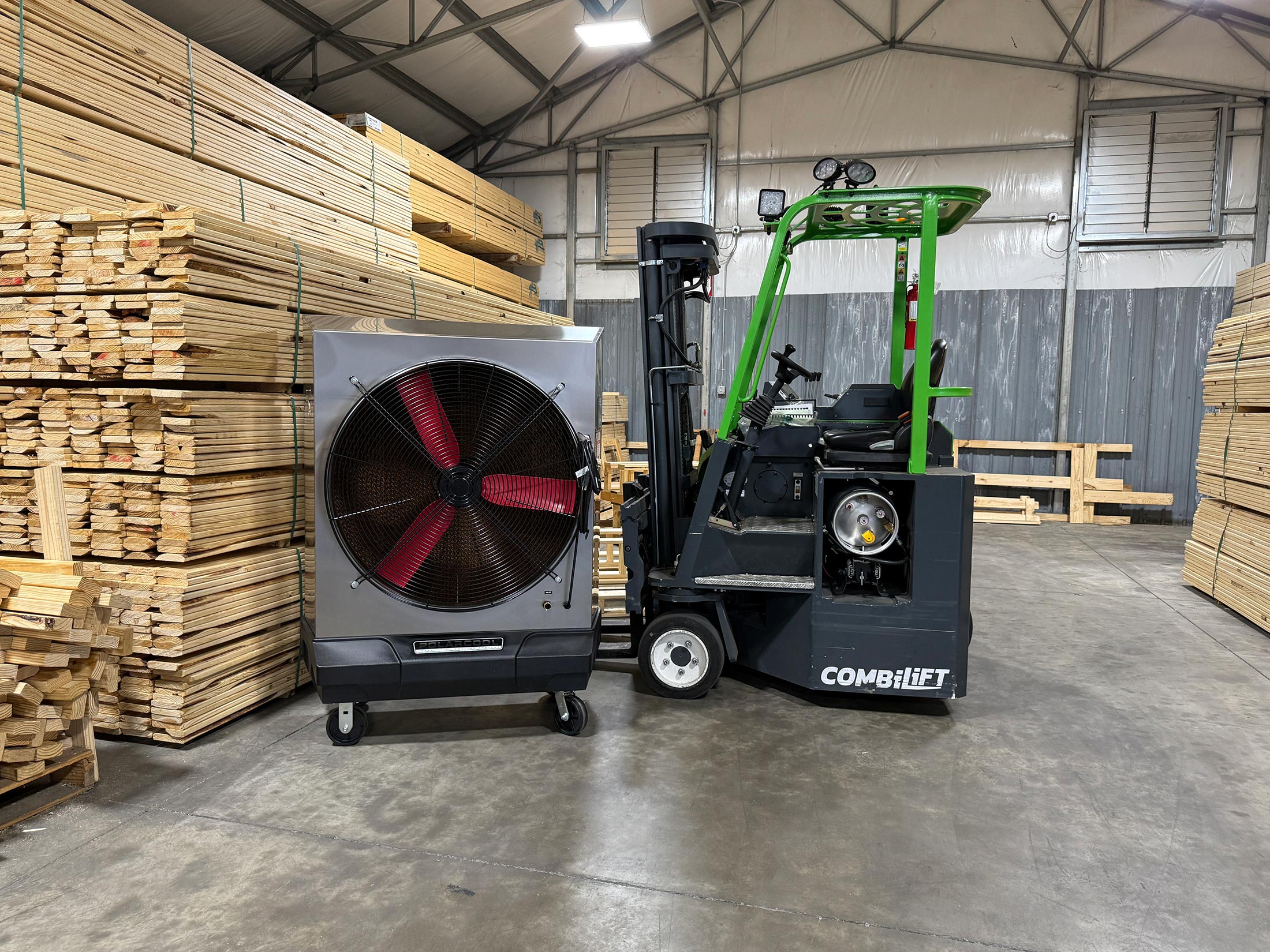
Warehouses are one of the most popular applications for evaporative cooling. High ceilings and open loading dock doors often make traditional air conditioning inefficient and expensive.
Evaporative coolers provide targeted cooling and airflow in employee work areas while maintaining lower operating costs.
Garages frequently experience heat buildup from vehicles, equipment, and limited insulation. Because garage doors are often opened throughout the day, evaporative coolers offer a practical alternative to traditional AC systems.
Production equipment generates significant heat in many manufacturing environments. Evaporative cooler fans can improve comfort around assembly lines, workstations, and production areas without requiring major HVAC upgrades.
Outdoor cooling is one of the strongest applications for evaporative cooler fans.
Unlike traditional air conditioning, evaporative coolers don't rely on containing cooled air within a sealed environment. Instead, they continuously create and move cooled air through occupied spaces.
Common outdoor applications include:
Because outdoor environments naturally provide airflow, evaporative coolers can perform extremely well when positioned correctly.
Proper placement significantly impacts performance.
For best results:
Many businesses use multiple units to create overlapping airflow patterns for larger outdoor spaces.
Humidity is one of the most important factors affecting evaporative cooling performance.
Evaporative coolers work by adding moisture to the air while reducing temperature. In dry climates, evaporation occurs rapidly and cooling performance is maximized.
As humidity increases, the air's ability to absorb additional moisture decreases.
This doesn't mean evaporative coolers stop working in humid conditions. Strong airflow still improves comfort and helps reduce heat stress. However, temperature reduction may not be as dramatic as in dry climates.
Both environments can benefit from evaporative cooling when the system is properly sized and positioned.
If your space is:
An evaporative cooler fan may be an excellent cooling solution.
The most important factors are airflow, ventilation, and selecting the appropriate unit size for the space.
(Internal Link: How to Size an Evaporative Cooler for Your Space)
Evaporative cooler fans provide flexible cooling solutions for both indoor and outdoor environments. From warehouses and manufacturing facilities to patios and outdoor events, these systems deliver efficient airflow and practical temperature reduction without the complexity and expense of traditional air conditioning.
By understanding ventilation requirements, humidity conditions, and proper placement techniques, you can maximize cooling performance and create more comfortable environments wherever cooling is needed.
Related Resources: