Cart
0
You may also like


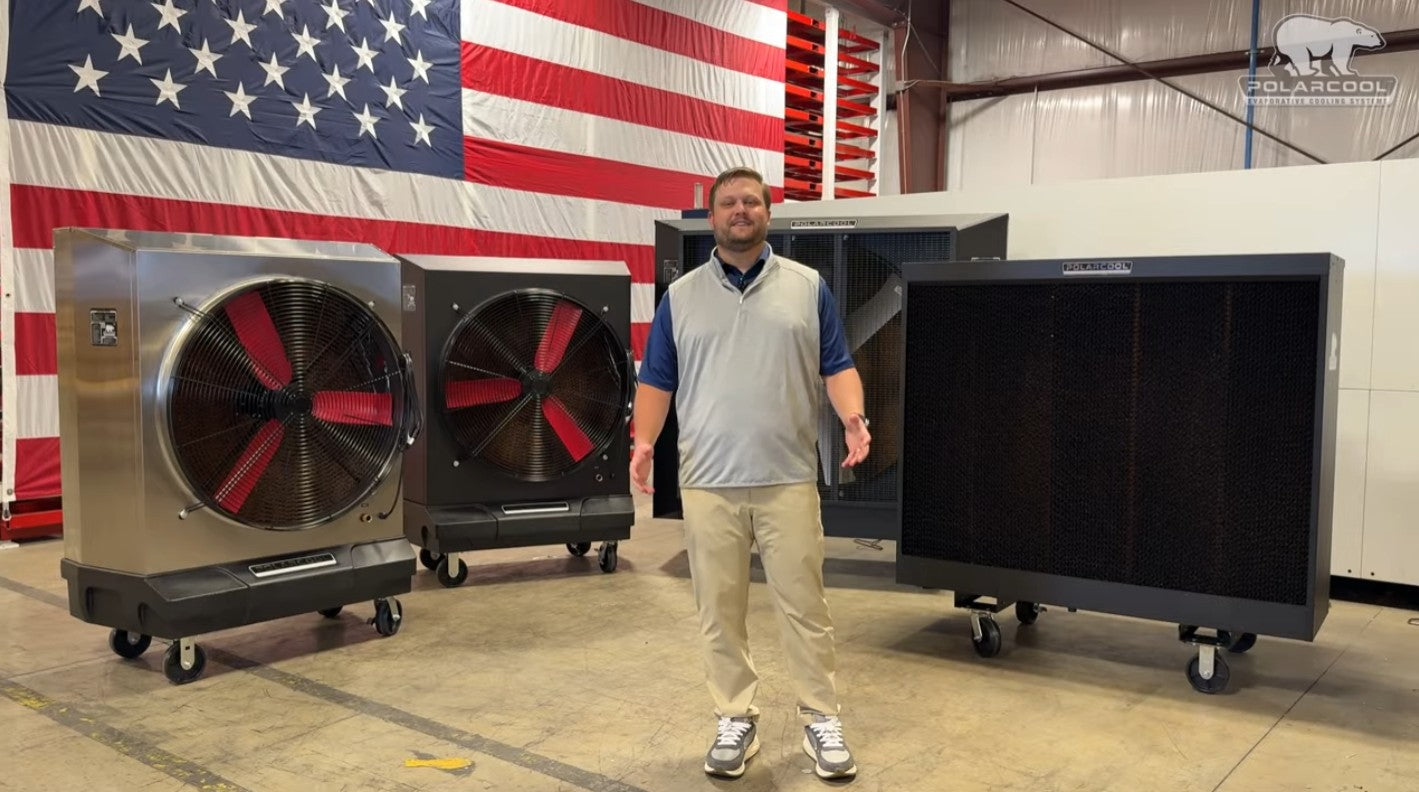
Like any piece of equipment, evaporative cooler fans perform best when they receive regular maintenance. The good news is that evaporative coolers are relatively simple systems compared to traditional air conditioning units, making routine upkeep straightforward and affordable.
A properly maintained evaporative cooler fan will deliver better airflow, improved cooling performance, longer equipment life, and more reliable operation throughout the cooling season. Whether you're using your unit in a warehouse, garage, workshop, manufacturing facility, or outdoor workspace, a few simple maintenance practices can help maximize performance and reduce downtime.
Evaporative coolers rely on several key components working together:
When any of these components become dirty, clogged, or worn, cooling performance can decrease significantly.
Regular maintenance helps:
A few minutes of preventative maintenance can often prevent larger problems later.
Cooling pads are one of the most important components in an evaporative cooler system. As warm air passes through water-saturated pads, evaporation removes heat and cools the air before it is circulated into the space.
Over time, cooling pads can accumulate:
As buildup increases, airflow and cooling performance can decline.
Inspect cooling pads regularly and replace them when they become excessively worn, damaged, or clogged. Fresh pads help maintain maximum cooling efficiency and airflow.
Water quality plays an important role in evaporative cooling performance.
Minerals and sediment naturally collect in the reservoir over time, especially in areas with hard water. Left unchecked, buildup can affect pumps, water distribution systems, and cooling pads.
Periodically:
Keeping the tank clean helps support efficient operation and reduces mineral accumulation throughout the system.
The pump is responsible for circulating water through the cooling pads. If water is not reaching the pads evenly, cooling performance will suffer.
Signs of pump issues may include:
Regular inspection helps identify issues before they impact performance during the hottest days of the season.
Many evaporative coolers use tubing, manifolds, or distribution systems to deliver water across the cooling pads.
Inspect these components periodically for:
Even water coverage across the pads helps ensure consistent cooling and efficient operation.
Airflow is critical to evaporative cooling performance.
Dust, debris, and airborne contaminants can accumulate on intake screens and vents, restricting airflow and reducing cooling capacity.
Make it a habit to:
Proper airflow allows the unit to operate at peak efficiency.
The fan is responsible for moving cooled air into the space. Reduced airflow often indicates a problem that should be addressed early.
Check for:
Addressing minor issues early can help avoid larger repairs later.
Before the cooling season begins:
Starting the season with a clean, fully inspected unit helps ensure reliable performance when temperatures rise.
When the cooling season ends, proper storage and shutdown procedures help protect the equipment.
Recommended steps include:
These simple steps help extend the life of your evaporative cooler and prepare it for the next season.
Even with excellent maintenance, some components eventually wear out and require replacement.
Common replacement items include:
Using quality replacement parts helps maintain performance and ensures compatibility with your equipment.
(Internal Link: PolarCool Parts Collection)
Routine maintenance is one of the easiest ways to maximize the performance and lifespan of your evaporative cooler fan. By keeping cooling pads clean, maintaining proper water flow, and ensuring unrestricted airflow, you can enjoy consistent cooling performance throughout the season.
Whether you're cooling a warehouse, garage, workshop, or outdoor workspace, a well-maintained evaporative cooler will operate more efficiently, last longer, and provide dependable comfort when temperatures climb.
Related Resources: