Cart
0
You may also like


Llamas and alpacas are intelligent, hardy animals — but heat is their Achilles heel. Native to the high-altitude Andean highlands, where temperatures are cool and humidity is low, camelids are simply not built for the hot, humid summers of the American South, Midwest, and mid-Atlantic. Their dense, insulating fleece — the same fiber that makes them commercially valuable — becomes a liability when temperatures climb, trapping heat against the body and making natural cooling difficult.
Heat stress in llamas and alpacas is not just a welfare concern. It is a genuine emergency. Animals that go down with heat stress frequently die, and those that survive can carry permanent damage to their temperature-regulation systems — making them heat-intolerant for life. For camelid owners, prevention is not optional. It is the entire game.
Unlike cattle or horses, llamas and alpacas have limited physiological tools for shedding heat. They do not sweat efficiently across their body surface, and their thick fleece creates a thermal barrier that traps heat close to the skin. Their primary heat dissipation happens through a region veterinarians call the thermal window — the relatively bare skin of the inner legs, belly, and armpits. This is why airflow directed at floor level, underneath the animal, is so much more effective than overhead fans. Getting cooled air to move across those uninsulated surfaces is where meaningful temperature reduction actually happens.
Normal body temperature for an adult llama or alpaca runs between 99 degrees F and 101.5 degrees F. When core temperature climbs above 104 to 105 degrees F, organ damage becomes a real risk — and the situation can deteriorate quickly. Ohio State University veterinary researchers note that even on a mild day with a temperature of 72 degrees F and 65% humidity, unshorn animals can show signs of low-grade heat stress when handled.
Camelid health experts use a simple heat index calculation: add the ambient temperature in degrees Fahrenheit to the percent relative humidity. A reading below 120 is generally safe. Between 120 and 180, problems become possible and monitoring is warranted. Above 180, animals are at high risk and all preventive measures should be fully active. Across much of the United States in July and August, afternoon readings routinely reach 170 to 200. For camelid owners in those regions, summer is a sustained heat management challenge — not just a few bad days.
Because camelids deteriorate quickly once heat stress sets in, early recognition is critical. Contact your veterinarian immediately if you observe any of the following:
• Open-mouthed breathing or nasal flaring — a serious warning sign in camelids, who normally breathe through their nose
• Rapid, labored, or heaving respiration — a respiratory rate above 40 breaths per minute is concerning
• Drooling or hypersalivation
• Lethargy, depression, or unresponsiveness
• Loss of appetite or refusal to rise
• Scrotal swelling in intact males — heat stress at 104 to 105 degrees F can destroy sperm and in severe cases permanently damage fertility
• Weakness, trembling, or collapse
One important note: heat has a cumulative effect on the body. An animal that appears to recover from a heat event should be monitored closely for several days afterward. Animals that have experienced heat stroke often become heat-intolerant for life because of lasting changes to the brain's temperature regulation centers.
Managing heat in camelids requires understanding one critical rule about their fleece: wetting the fiber itself makes things worse, not better. Moisture trapped within dense fleece heats against the skin and acts as an insulating blanket — the opposite of what you want. Veterinarians are consistent on this point: if you hose a llama or alpaca, target the belly, legs, armpits, and throat — the thermal window areas with direct skin access. Do not mist the fiber. If the fiber does get wet, soak it completely through to the skin; partial wetting is more harmful than none at all.
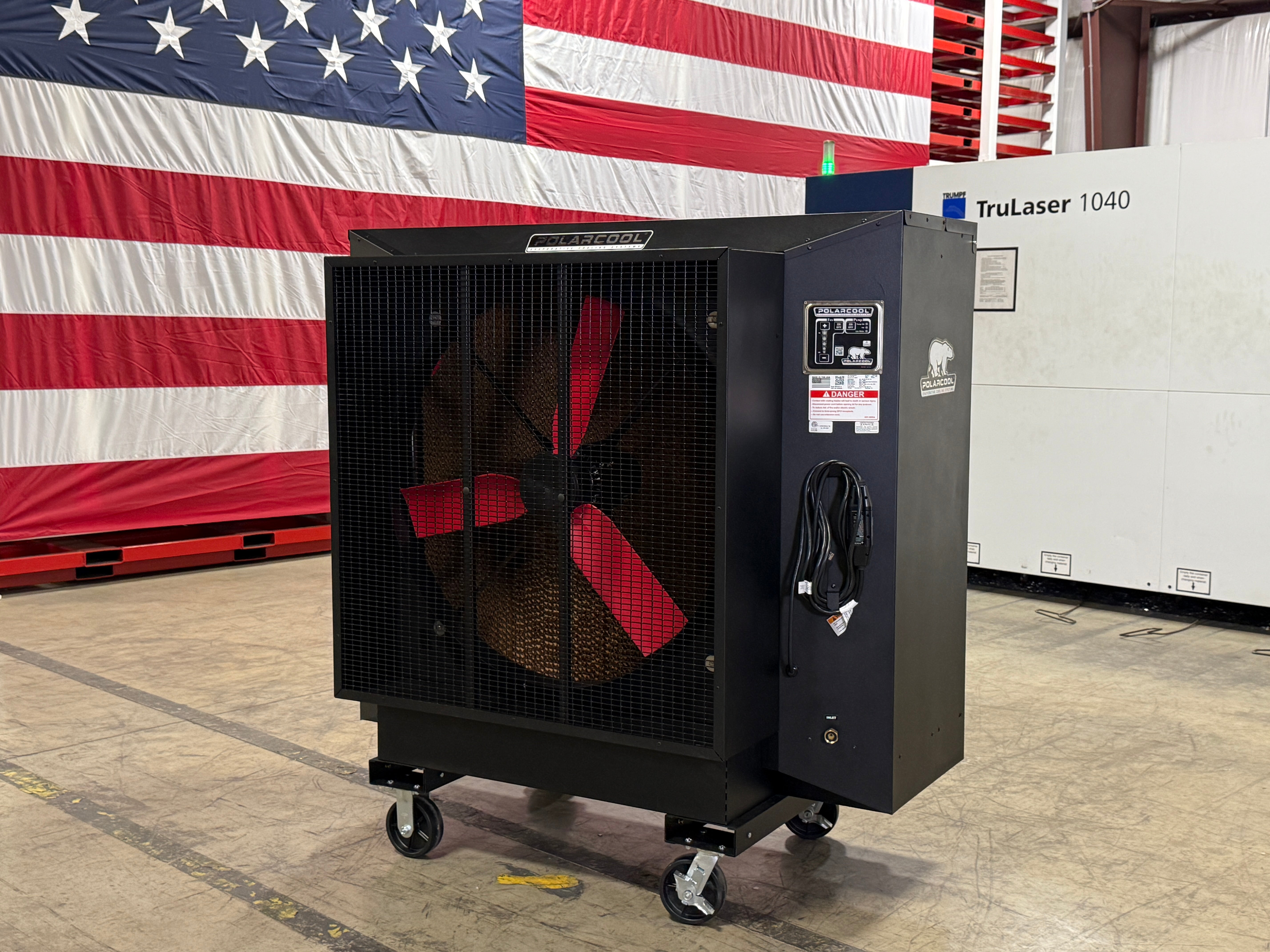
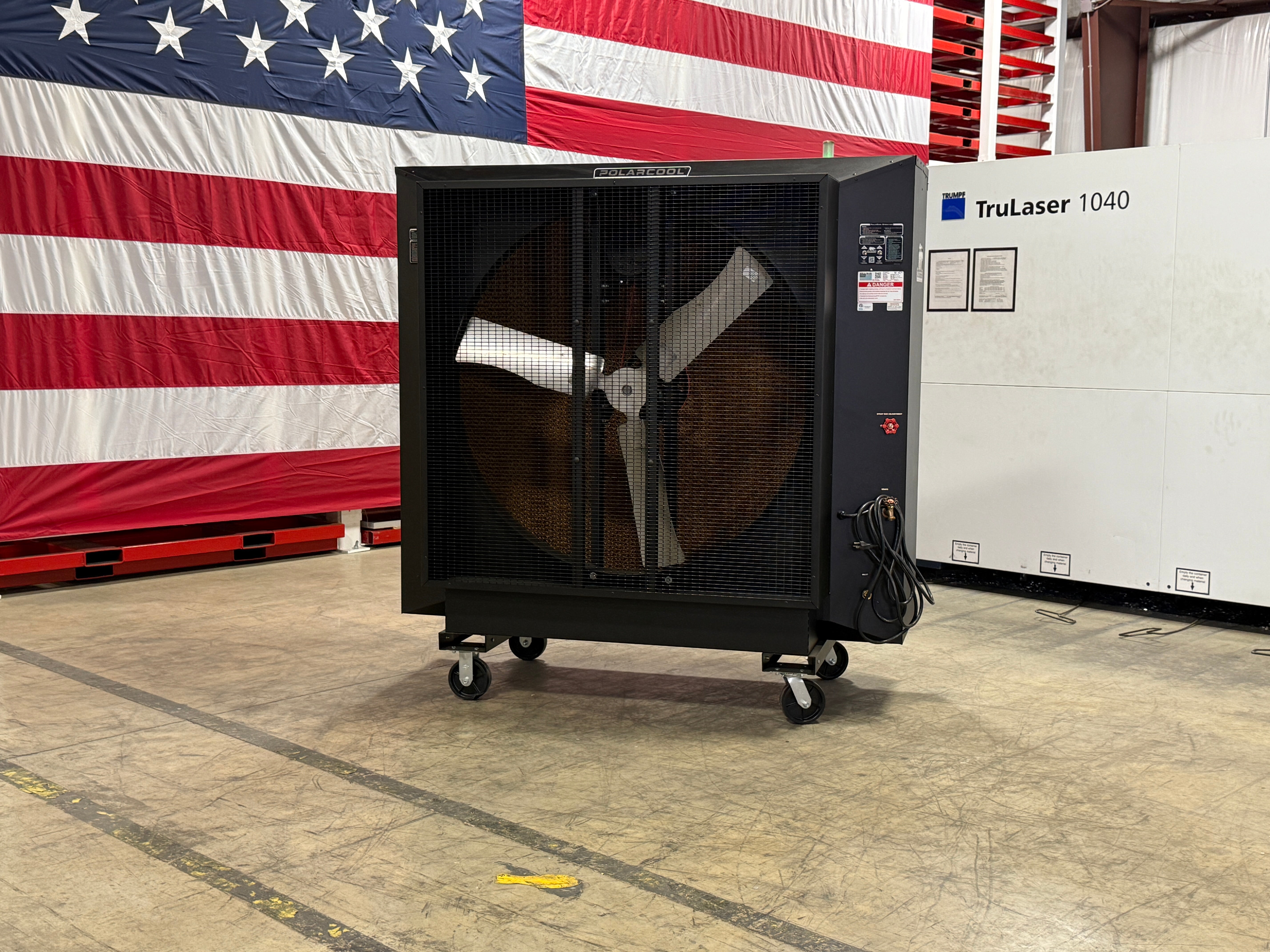
This is precisely why moving air — directed at the right areas — is so effective for camelids. A PolarCool evaporative cooler delivering temperature-reduced, flowing air at body height reaches the thermal window directly, without the complications of fiber saturation. The cooled air lowers ambient temperature around the animal, draws heat from exposed skin surfaces, and supports the animal's own evaporative cooling at those critical bare-skin zones.
PolarCool fans reduce air temperature by 10 to 20 degrees F under typical summer conditions — and up to 30 degrees F in drier climates. That is meaningful for an animal that reaches dangerous territory at 104 degrees F. By keeping barn and shelter temperatures well below the stress threshold throughout the day, you eliminate the heat accumulation problem before it starts.
The key is positioning. Direct your PolarCool so cooled airflow moves across the animals at body height or below — not from overhead. Cross-ventilation is essential: the cooler draws in fresh outside air, conditions it, and moves it through the space. Ensure there is an outlet on the opposite side so hot, humid air has somewhere to exit. Stagnant air — even cooled air — loses its benefit quickly as humidity builds.
• Position fans at body height or lower, directing airflow across the thermal window beneath the animal
• Establish cross-ventilation so fresh air enters on one side and heat exhausts on the other
• Run continuously during peak heat hours — typically 11 AM through 6 PM in summer
• Start cooling in the morning before heat builds; preventing accumulation is far easier than recovering from it
• Combine with shade — evaporative cooling is significantly more effective when animals are out of direct sun
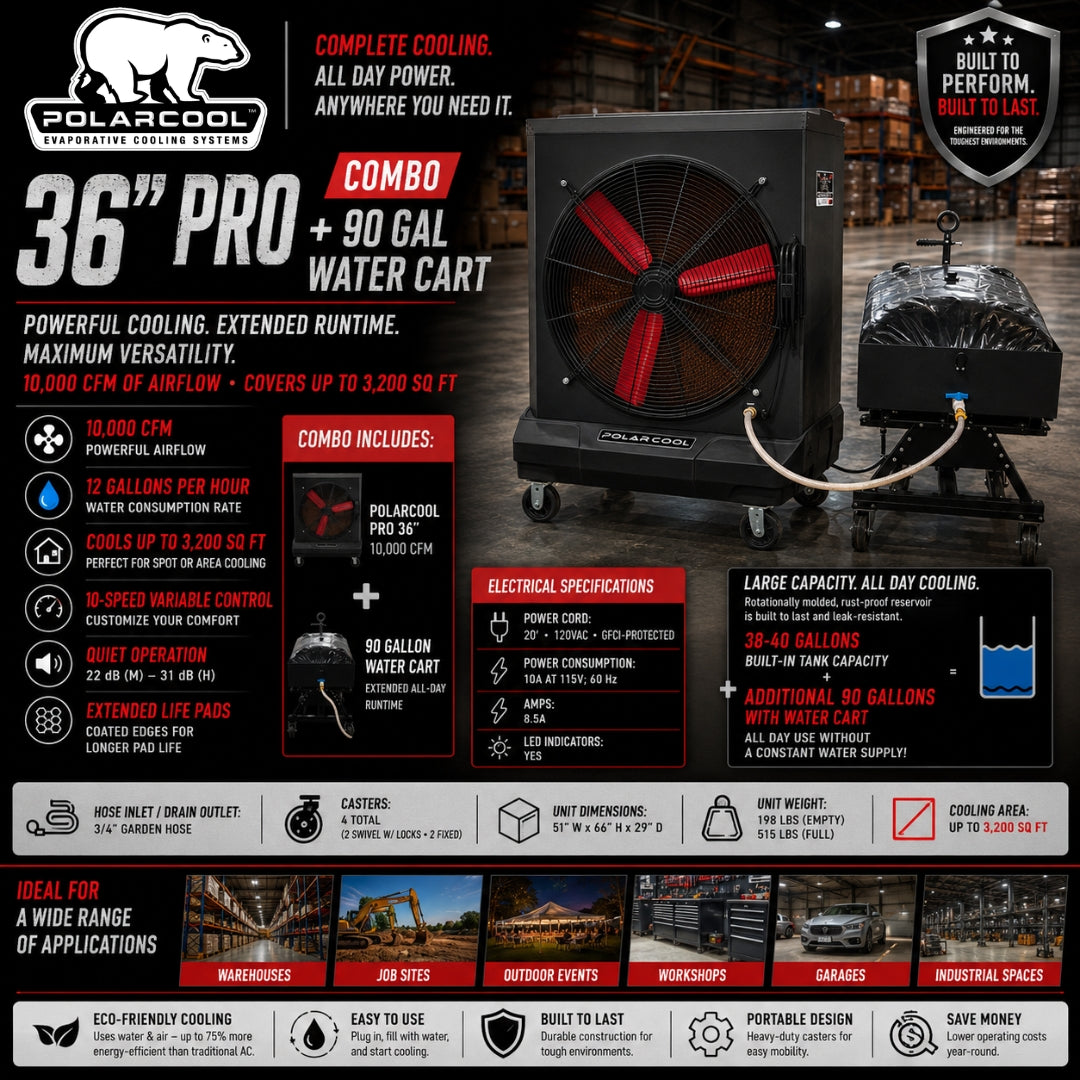
• Connect to a continuous hose supply for all-day operation during sustained hot weather
Show-season llamas and alpacas face a compounding challenge: they are transported to unfamiliar venues, handled more frequently, and often cannot wade or be hosed down without risking fiber quality for judging. Evaporative cooling becomes the primary heat management tool available when other options are off the table.
PolarCool's portable, self-contained design makes it ideal for fair and show use. Move it between stalls and venues with ease. Setup requires only water and a standard electrical outlet — no permanent installation, no contractors. At a jackpot show, county fair, or state fair, that simplicity matters.
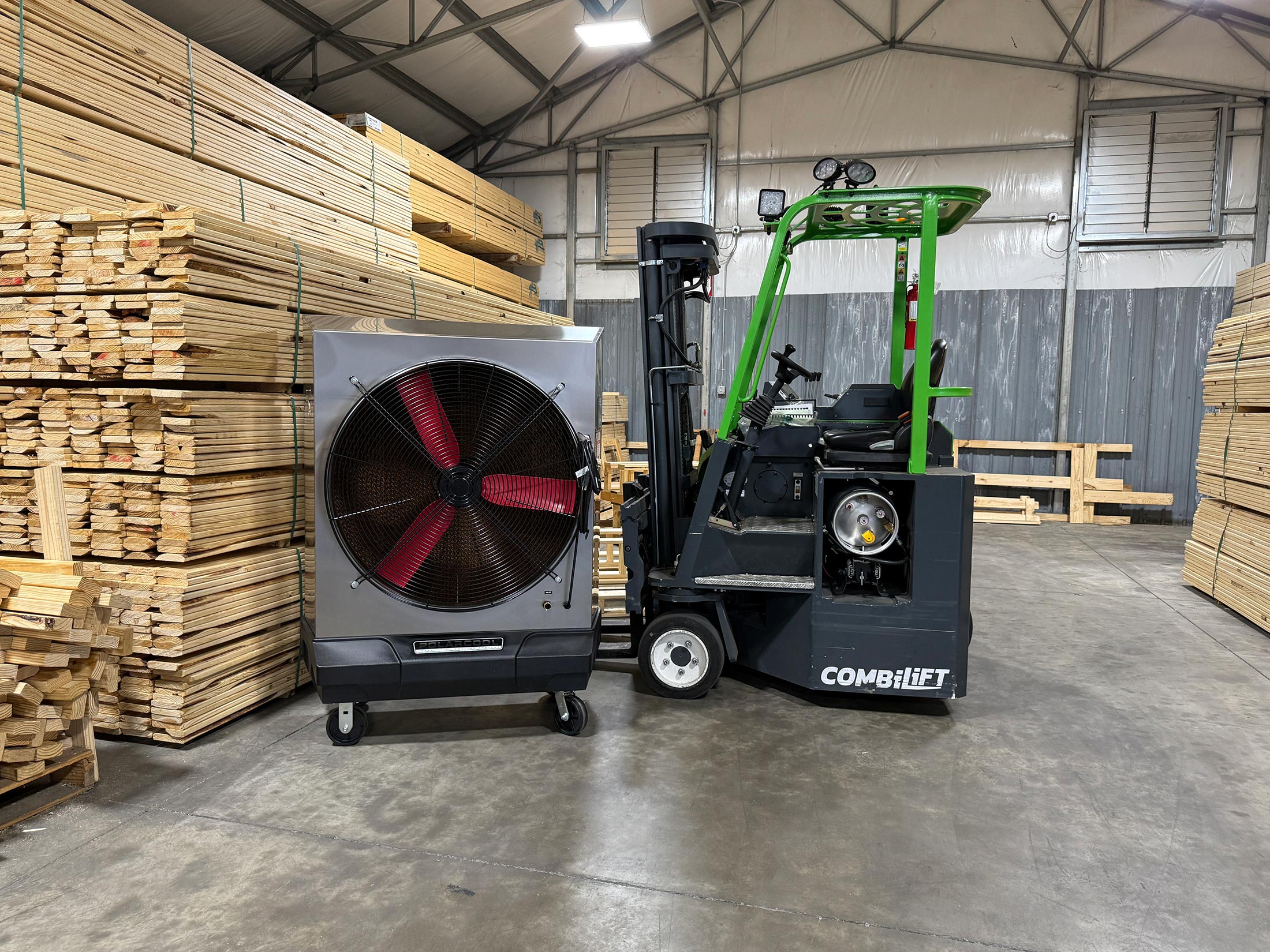
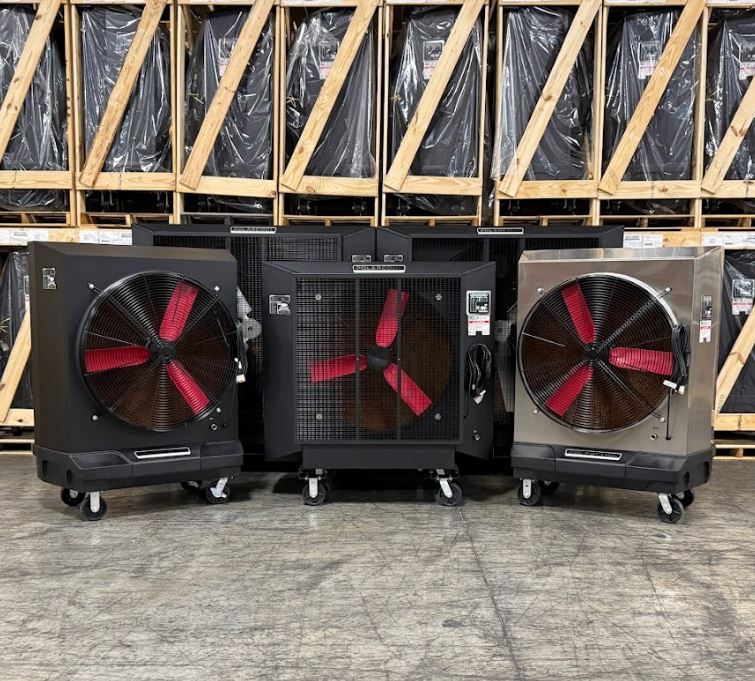
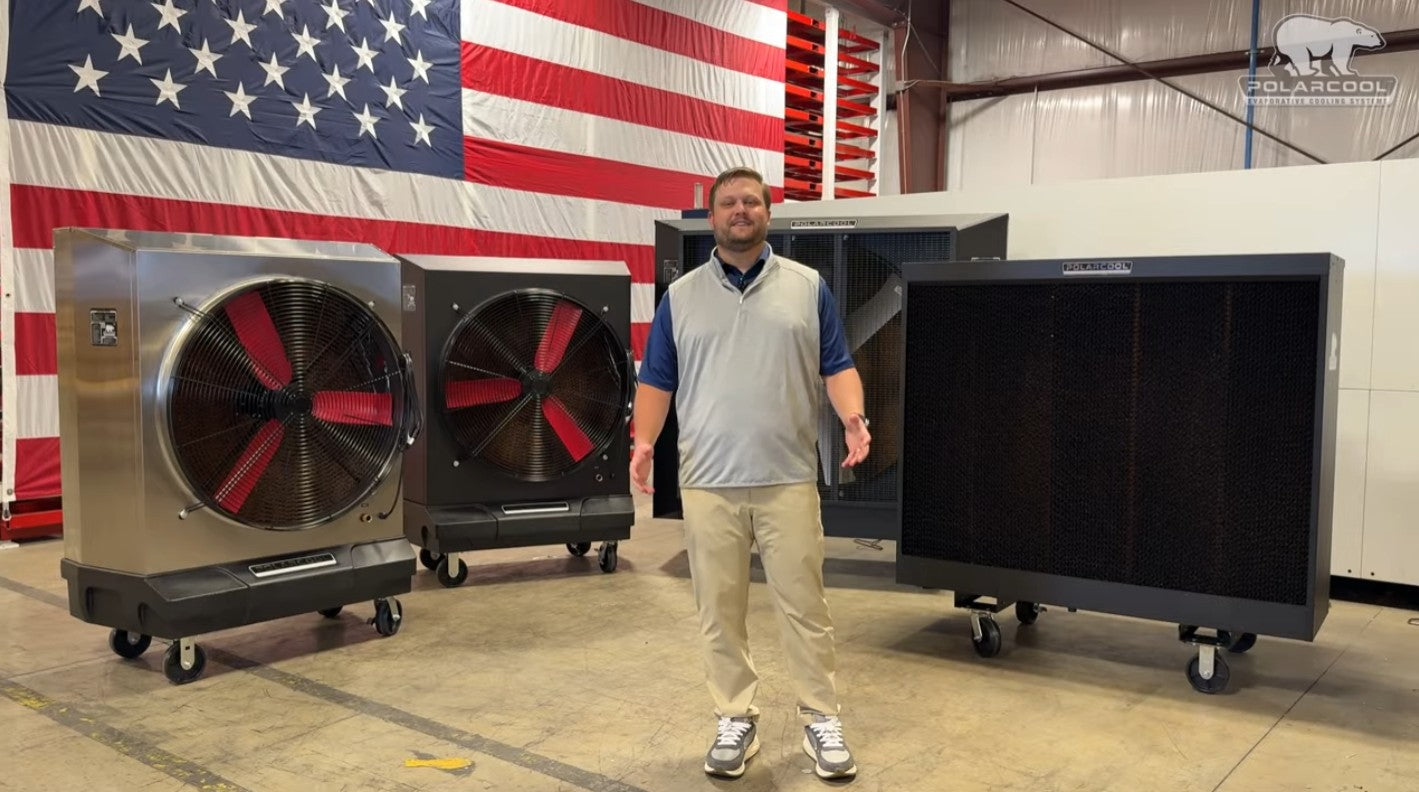
For barns, shelters, and show stalls where llamas and alpacas live and work, PolarCool strongly recommends the stainless steel cabinet model. Camelid environments involve regular hosing, manure exposure, and the kind of damp, high-humidity conditions that degrade standard metal surfaces over time. Stainless steel resists corrosion and pitting, cleans easily with standard barn solutions, and maintains structural integrity through years of agricultural use. When you are running equipment in a working fiber-animal operation, stainless is not a luxury — it is the practical, long-term choice.
For llama and alpaca operations, choose PolarCool's stainless steel model. It handles the moisture, cleaning, and demanding conditions of a working fiber-animal barn — and it is built to last.
PolarCool works best as part of a comprehensive heat management approach. Combine evaporative cooling with these practices for the best outcomes:
• Shear annually before summer — before temperatures consistently reach 80 degrees F. Full body shearing is most effective; barrel cuts still help. Shearing alone does not prevent heat stress, but unshorn animals face dramatically higher risk.
• Provide ample shade for all animals simultaneously — competition for shade increases heat stress in lower-ranking herd members.
• Keep fresh, cool water available at all times, positioned in the shade, and refreshed frequently to prevent warming.
• Schedule handling, working, and breeding-related activities for early morning hours only.
• Monitor pregnant dams closely — unborn crias can suffer heat-related developmental damage even when the dam shows minimal symptoms.
• Check intact males during heat events — breeding-age males face serious fertility risk at elevated body temperatures.
Llamas and alpacas bring real value to the farms and families that raise them — in fiber, in the show ring, and as companions. Keeping them safe through a hot American summer takes the right tools and the right plan. A PolarCool evaporative cooler is one of the most effective investments you can make for their welfare and your peace of mind.
Browse the full lineup at polarcoolstore.com, or call our team at 1-888-765-5732. All in-stock units ship next day to the 48 lower U.S. states.